Categories
Blog

Kalk blog Title 01

kalksolution@gmail.com

Lorem ipsum dolor sit amet, consectetur adipiscing elit, sed do eiusmod tempor incididunt ut labore et dolore magna aliqua. Ut enim ad minim veniam, quis nostrud exercitation ullamco laboris nisi ut aliquip ex ea commodo consequat. Duis aute irure dolor in reprehenderit in voluptate velit esse cillum dolore eu fugiat nulla pariatur. Excepteur sint occaecat cupidatat non proident, sunt in culpa qui officia deserunt mollit anim id est laborum.
Lorem ipsum dolor sit amet Lorem ipsum dolor sit amet?

Lorem ipsum dolor sit amet, consectetur adipiscing elit, sed do eiusmod tempor incididunt ut labore et d ut aliquip ex ea commodo consequat. Duis aute irure dolor in reprehenderit in voluptate proident, sunt in culpa qui officia deserunt mollit anim id est laborum.

Lorem ipsum dolor sit amet:

  • Lorem ipsum dolor — Lorem ipsum dolor sit amet, consectetur adipiscing elit
  • Lorem ipsum dolor — Lorem ipsum dolor sit amet, consectetur adipiscing elit
  • Lorem ipsum dolor — Lorem ipsum dolor sit amet, consectetur adipiscing elit Lorem ipsum dolor sit amet, consectetur adipiscing elit
  • Lorem ipsum dolor — Lorem ipsum dolor sit amet, consectetur adipiscing elit
  • Lorem ipsum dolor — Lorem ipsum dolor sit amet, consectetur adipiscing elitLorem ipsum dolor sit amet.

Lorem ipsum dolor sit amet, consectetur adipiscing elitLorem ipsum dolor sit amet, consectetur adipiscing elit.

Lorem ipsum dolor sit amet consectetur adipiscing

Lorem ipsum dolor sit amet: consectetur adipiscing elit, sed doLorem ipsum dolor sit amet, consectetur adipiscing elit, sed

Lorem ipsum dolor sit amet: consectetur adipiscing elit, sed doLorem ipsum dolor sit amet, consectetur adipiscing elit, sed

Lorem ipsum dolor sit amet: consectetur adipiscing elit, sed doLorem ipsum dolor sit amet, consectetur adipiscing elit, sed

Lorem ipsum dolor sit amet: consectetur adipiscing elit, sed doLorem ipsum dolor sit amet, consectetur adipiscing elit, sed

Lorem ipsum dolor sit amet: consectetur adipiscing elit, sed doLorem ipsum dolor sit amet, consectetur adipiscing elit, sed

Lorem ipsum dolor sit amet: consectetur adipiscing elit, sed doLorem ipsum dolor sit amet, consectetur adipiscing elit, sed

Lorem ipsum dolor sit amet: consectetur adipiscing elit, sed doLorem ipsum dolor sit amet, consectetur adipiscing elit, sed

Lorem ipsum dolor sit amet consectetur adipiscing elit, sed doLorem ipsum dolor sit amet, consectetur adipiscing elit, sed:

Lorem ipsum dolor sit amet consectetur adipiscing elit, sed doLorem

Lorem ipsum dolor sit amet consectetur adipiscing elit, sed doLorem ipsum dolor sit amet, consectetur adipiscing elit, sed:

  • Lorem ipsum dolor sit amet: consectetur adipiscing elit, sed doLorem ipsum
  • Lorem ipsum dolor sit amet: consectetur adipiscing elit, sed doLorem ipsum
  • Lorem ipsum dolor sit amet: consectetur adipiscing elit, sed doLorem ipsum
  • Lorem ipsum dolor sit amet: consectetur adipiscing elit, sed doLorem ipsum
  • Lorem ipsum dolor sit amet: consectetur adipiscing elit, sed doLorem ipsum

Lorem ipsum dolor sit amet consectetur adipiscing elit, sed doLorem ipsum dolor sit amet, consectetur adipiscing elit, sed.

Lorem ipsum dolor sit amet consectetur adipiscing elit, sed

Lorem ipsum dolor sit amet consectetur adipiscing elit, sed doLorem ipsum dolor sit amet, consectetur adipiscing elit, sed.

1. Lorem ipsum dolor sit amet: consectetur adipiscing elit, sed doLorem ipsum dolor sit amet, consectetur adipiscing elit, sed.

2. Lorem ipsum dolor sit amet: consectetur adipiscing elit, sed doLorem ipsum dolor sit amet, consectetur adipiscing elit, sed.

3. Lorem ipsum dolor sit amet: consectetur adipiscing elit, sed doLorem ipsum dolor sit amet, consectetur adipiscing elit, sed.

4. Lorem ipsum dolor sit amet: consectetur adipiscing elit, sed doLorem ipsum dolor sit amet, consectetur adipiscing elit, sed.

5. Lorem ipsum dolor sit amet: consectetur adipiscing elit, sed doLorem ipsum dolor sit amet, consectetur adipiscing elit, sed.

6. Lorem ipsum dolor sit amet, consectetur adipiscing elit, sed doLorem ipsum dolor sit amet, consectetur adipiscing elit, sed.

Lorem ipsum dolor sit amet, consectetur adipiscing elit

Lorem ipsum dolor sit amet, consectetur adipiscing elit, sed doLorem ipsum dolor sit amet, consectetur adipiscing elit, sed:

  • Lorem ipsum dolor — Lorem ipsum dolor sit amet, consectetur adipiscing elit, sed do
  • Lorem ipsum dolor — Lorem ipsum dolor sit amet, consectetur adipiscing elit, sed do
  • Lorem ipsum dolor — Lorem ipsum dolor sit amet, consectetur adipiscing elit, sed do
  • Lorem ipsum dolor — Lorem ipsum dolor sit amet, consectetur adipiscing elit, sed do
  • Lorem ipsum dolor — Lorem ipsum dolor sit amet, consectetur adipiscing elit, sed do
  • Lorem ipsum dolor — Lorem ipsum dolor sit amet, consectetur adipiscing elit, sed do

Lorem ipsum dolor sit amet, consectetur adipiscing elit, sed doLorem ipsum dolor sit amet, consectetur adipiscing elit, sed doLorem ipsum dolor sit amet, consectetur adipiscing elit, sed do.

Lorem ipsum dolor — consectetur adipiscing elit, sed doLorem

Lorem ipsum dolor sit amet, consectetur adipiscing elit, sed doLorem ipsum dolor sit amet, consectetur adipiscing elit, sed doLorem ipsum dolor sit amet, consectetur adipiscing elit, sed do.

What sets them apart:

  • Lorem ipsum dolor sit amet, consectetur adipiscing elit, sed do
  • Lorem ipsum dolor sit amet, consectetur adipiscing elit, sed do
  • Lorem ipsum dolor sit amet, consectetur adipiscing elit, sed do
  • Lorem ipsum dolor sit amet, consectetur adipiscing elit, sed do
  • Lorem ipsum dolor sit amet, consectetur adipiscing elit, sed do

Lorem ipsum dolor sit amet, consectetur adipiscing elit, sed do eiusmod tempor incididunt ut labore et dolore magna aliqua.

Conclusion

Lorem ipsum dolor sit amet, consectetur adipiscing elit, sed do eiusmod tempor incididunt ut labore et dolore magna aliqua. Ut enim ad minim veniam, quis nostrud exercitation ullamco laboris nisi ut aliquip ex ea commodo consequat. Duis aute irure dolor in reprehenderit in voluptate velit esse cillum dolore eu fugiat nulla pariatur. Excepteur sint occaecat cupidatat non proident, sunt in culpa qui officia deserunt mollit anim id est laborum.

FAQs

Lorem ipsum dolor sit amet, consectetur adipiscing elit, sed?
Lorem ipsum dolor sit amet, consectetur adipiscing elit, sed do eiusmod tempor incididunt ut labore et dolore magna aliqua. Ut enim ad minim veniam, quis nostrud exercitation ullamco laboris nisi ut aliquip ex ea commodo consequat. Duis aute irure dolor in reprehenderit
Lorem ipsum dolor sit amet, consectetur adipiscing elit, sed?
Lorem ipsum dolor sit amet, consectetur adipiscing elit, sed do eiusmod tempor incididunt ut labore et dolore magna aliqua. Ut enim ad minim veniam, quis nostrud exercitation ullamco laboris nisi ut aliquip ex ea commodo consequat. Duis aute irure dolor in reprehenderit
Lorem ipsum dolor sit amet, consectetur adipiscing elit, sed?
Lorem ipsum dolor sit amet, consectetur adipiscing elit, sed do eiusmod tempor incididunt ut labore et dolore magna aliqua. Ut enim ad minim veniam, quis nostrud exercitation ullamco laboris nisi ut aliquip ex ea commodo consequat. Duis aute irure dolor in reprehenderit
Lorem ipsum dolor sit amet, consectetur adipiscing elit, sed?
Lorem ipsum dolor sit amet, consectetur adipiscing elit, sed do eiusmod tempor incididunt ut labore et dolore magna aliqua. Ut enim ad minim veniam, quis nostrud exercitation ullamco laboris nisi ut aliquip ex ea commodo consequat. Duis aute irure dolor in reprehenderit
Lorem ipsum dolor sit amet, consectetur adipiscing elit, sed?
Lorem ipsum dolor sit amet, consectetur adipiscing elit, sed do eiusmod tempor incididunt ut labore et dolore magna aliqua. Ut enim ad minim veniam, quis nostrud exercitation ullamco laboris nisi ut aliquip ex ea commodo consequat. Duis aute irure dolor in reprehenderit
Lorem ipsum dolor sit amet, consectetur adipiscing elit, sed?
Lorem ipsum dolor sit amet, consectetur adipiscing elit, sed do eiusmod tempor incididunt ut labore et dolore magna aliqua. Ut enim ad minim veniam, quis nostrud exercitation ullamco laboris nisi ut aliquip ex ea commodo consequat. Duis aute irure dolor in reprehenderit
Categories
Blog

Top AI Tools for Smarter Marketing Automation in 2026

kalksolution@gmail.com

Marketing in 2026 is no longer about doing more. It’s about doing it smarter.

With rising competition, longer B2B sales cycles, and increasing customer expectations, businesses are turning to AI marketing tools and automation platforms to scale faster, reduce manual work, and improve ROI.

If you’re exploring the best marketing automation tools, this guide will help you understand:

  • What AI marketing tools actually do
  • Which tools are worth considering in 2026
  • How to choose the right stack for your business
  • How B2B companies can use AI for real growth

What Are AI Marketing Tools and Why Do They Matter in 2026?

AI marketing tools use machine learning, predictive analytics, and automation to manage campaigns, analyze data, and optimize results without constant manual input.

In 2026, the shift is clear:

  • AI doesn’t just automate tasks
  • It predicts outcomes and improves decisions in real time

In fact, leading B2B teams using AI-powered marketing automation report:

  • Higher conversion rates
  • Faster content production
  • Better lead qualification and targeting 

This is why AI is now a core part of modern marketing automation strategies, not just an add-on.

Key Features to Look for in Marketing Automation Tools

Before choosing any tool, it’s important to understand what actually drives results.

The best AI marketing tools in 2026 typically include:

1. Predictive Lead Scoring

AI identifies which leads are most likely to convert based on behavior and past data.

2. Smart Content Generation

Tools generate blogs, emails, ads, and landing pages aligned with user intent.

3. Multi-Channel Automation

Email, LinkedIn, ads, and CRM workflows work together in one system.

4. Real-Time Optimization

Campaigns adjust automatically based on performance data.

5. Data Integration

Modern platforms connect multiple data sources to create a unified view of customers.

Top AI Marketing Automation Tools in 2026

Here are some of the most effective and widely used tools across B2B marketing automation and AI marketing workflows:

1. HubSpot (AI-Powered CRM + Automation)

Best for: All-in-one marketing, sales, and CRM

  • AI content assistant for emails and blogs
  • Predictive lead scoring
  • Workflow automation and customer tracking

HubSpot remains a leading choice because it combines data + AI + automation in one platform, making it ideal for scaling marketing operations. 

2. Marketo Engage (Adobe)

Best for: Enterprise B2B marketing automation

  • Advanced lead nurturing workflows
  • AI-driven audience segmentation
  • Campaign personalization at scale

Marketo is still a strong option for companies with complex sales funnels and large datasets. 

3. Salesforce Marketing Cloud

Best for: Data-driven marketing ecosystems

  • Deep CRM integration
  • AI-powered personalization
  • Journey automation across multiple channels

Ideal for businesses focused on customer lifecycle marketing and enterprise growth. 

4. Jasper / Copy.ai (AI Content Tools)

Best for: Content marketing automation

  • Blog writing and ad copy generation
  • Email and landing page creation
  • Brand voice consistency

These tools are widely used to scale content production without compromising quality. 

5. Surfer SEO + AI Optimization Tools

Best for: SEO-driven content automation

  • Keyword optimization
  • SERP-based content recommendations
  • AI content scoring

Perfect for businesses targeting organic growth and Google rankings.

6. Writesonic

Best for: AI search visibility and content scaling

  • Optimizes content for AI search engines
  • Tracks brand presence in AI-generated results
  • Helps improve visibility beyond traditional SEO

This reflects the shift toward Generative Engine Optimization (GEO) in 2026.

7. Coupler.io

Best for: Marketing analytics and reporting automation

  • Automates data collection from multiple platforms
  • Builds dashboards for performance tracking
  • Reduces manual reporting work

A great option for teams focused on data-driven marketing decisions. 

8. PhantomBuster

Best for: B2B lead generation and outreach

  • Automates LinkedIn and web data extraction
  • Builds lead lists and enrichment workflows
  • Supports scalable outbound marketing

Useful for companies focused on growth hacking and lead acquisition. 

9. Creatify AI

Best for: AI-powered ad creatives

  • Turns product links into video ads
  • Generates content for social media campaigns
  • Reduces dependency on creative teams

Perfect for brands scaling paid advertising and social campaigns.

How to Choose the Right AI Marketing Tool (Step-by-Step)

Choosing the right tool depends on your business model, not just features.

Step 1: Define Your Goal

  • Lead generation
  • Brand awareness
  • Conversion optimization
  • Customer retention

Step 2: Match Tool to Funnel Stage

  • Top funnel → Content + SEO tools
  • Mid funnel → Email + CRM automation
  • Bottom funnel → Sales + personalization tools

Step 3: Check Integration

Ensure the tool connects with:

  • CRM
  • Website
  • Ad platforms
  • Analytics tools

Step 4: Start Small, Then Scale

Don’t adopt everything at once. Build a stack gradually.

B2B Marketing Automation: What’s Changing in 2026?

B2B marketing automation is evolving beyond simple email workflows.

Today’s platforms:

  • Track user behavior across channels
  • Identify buying intent before form fills
  • Align marketing with sales teams
  • Deliver personalized messaging at scale 

This shift is especially important for industries with long decision cycles and multiple stakeholders.

Trends Shaping AI Marketing Tools in 2026

1. Predictive and Autonomous Marketing

AI systems now make decisions, not just suggestions.

2. Hyper-Personalization

Content and campaigns adapt in real time based on user behavior.

3. AI + CRM Integration

Data is becoming the foundation of all marketing automation.

4. Rise of AI Search Optimization

Brands are optimizing for AI-generated answers, not just Google rankings.

What This Means for Businesses in the UAE and Global Markets

For companies in competitive markets like the UAE, adopting AI marketing tools is no longer optional.

It directly impacts:

  • Lead quality
  • Campaign efficiency
  • Cost per acquisition
  • Market positioning

Businesses that invest early in AI-powered marketing automation gain a significant advantage in both local and global markets.

Final Thoughts

AI is not replacing marketers. It’s transforming how marketing works.

The real advantage in 2026 comes from:

  • Using the right tools
  • Aligning them with business goals
  • Building a scalable automation system

If you’re planning to upgrade your marketing strategy, now is the time to explore AI-driven automation and build a smarter, more efficient marketing engine.

Need Help? We're Here for You!

Got a question or need assistance? Our team is ready to help you every step of the way. Reach out to us, and we’ll get back to you as soon as possible!

Categories
Blog

AI vs Automation Tools: What Works Best for B2B Marketing in 2026?

kalksolution@gmail.com

B2B marketing is no longer just about sending emails or running campaigns. Today, businesses are choosing between AI marketing tools and marketing automation tools, often without fully understanding how each impacts growth.

If you’re a B2B company in the UAE or global market, the real question is not AI vs automation.

It’s: Where should you use AI, and where should you rely on automation to drive real ROI?

Let’s break it down in a practical, decision-focused way.

Understanding the Core Difference: AI vs Automation

At a basic level, both technologies aim to improve efficiency. But they work very differently.

Marketing Automation Tools (Rule-Based Execution)

Marketing automation tools follow predefined workflows:

  • Send email after form submission
  • Trigger follow-up after 3 days
  • Assign leads based on fixed criteria

They are consistent, predictable, and scalable. But they don’t “think” or adapt.

Automation systems are essentially rule-based engines that produce the same output for the same input every time. 

AI Marketing Tools (Adaptive Intelligence)

AI tools go beyond rules. They:

  • Analyze behavior patterns
  • Predict outcomes
  • Generate content
  • Personalize experiences in real time

Instead of following instructions, AI learns and improves over time, making it ideal for complex B2B buyer journeys.

Why This Matters in B2B Marketing

B2B marketing is not linear. Buyers:

  • Research across multiple channels
  • Take longer to convert
  • Require personalized engagement
  • Expect fast, relevant responses

This is where AI starts to outperform traditional automation.

In fact, AI-powered systems can increase qualified leads significantly and improve conversion speed by analyzing intent and behavior in real time.

Where Marketing Automation Tools Still Work Best

Despite the hype around AI, automation remains essential in B2B marketing.

Best Use Cases for Automation:

  • Email drip campaigns
  • CRM workflows
  • Lead nurturing sequences
  • Data syncing and integrations
  • Campaign scheduling

Automation is ideal when you need:

  • Consistency
  • Scalability
  • Process control

Think of it as your execution engine.

Where AI Marketing Tools Deliver Better Results

AI shines when decisions are complex and dynamic.

Best Use Cases for AI Tools:

  • Predictive lead scoring
  • Personalized content creation
  • Chatbots and conversational marketing
  • Ad performance optimization
  • Customer journey mapping

AI enables:

  • Real-time personalization
  • Better targeting
  • Faster decision-making

For example, AI-driven chatbots can engage leads instantly, qualify them, and even move them through the funnel without human intervention. 

AI + Automation: The Real Winning Strategy

Top-performing B2B companies are not choosing one over the other.

They are combining both.

How It Works in Practice:

  • AI identifies high-intent leads
  • Automation nurtures them with workflows
  • AI optimizes messaging and timing
  • Automation executes campaigns at scale

This hybrid approach allows businesses to:

  • Reduce manual work
  • Improve conversion rates
  • Scale without losing personalization

Many companies are already seeing strong ROI, with AI helping automate large portions of marketing operations while improving output quality.

Common Mistake: Falling for “AI-Washing”

One of the biggest challenges in 2026 is misleading tool positioning.

Many tools claim to be AI-powered but are actually just advanced automation.

Industry experts warn that:

  • Not all AI tools deliver real intelligence
  • Automation alone is not a competitive advantage
  • Strategy matters more than tools

There is a growing concern around “AI-washing,” where tools are marketed as AI without true capabilities. 

How to Choose the Right Tools for Your B2B Business

Here’s a simple decision framework:

Choose Marketing Automation Tools if:

  • You need structured workflows
  • Your processes are repetitive
  • You want reliable execution
  • You are scaling campaigns

Choose AI Marketing Tools if:

  • You want better targeting and personalization
  • Your data is large and complex
  • You need predictive insights
  • You want to improve conversion rates

Choose Both if:

  • You want full-funnel optimization
  • You are serious about growth
  • You want to compete in 2026 and beyond

What B2B Buyers Actually Expect Today

Modern B2B buyers expect:

  • Instant responses
  • Personalized communication
  • Relevant content
  • Seamless journeys

AI helps meet these expectations, while automation ensures consistent delivery.

That’s why over 80% of B2B companies are planning to expand AI adoption, making it a core part of future marketing strategies.

Practical Example: AI vs Automation in Action

Let’s say a user visits your website.

With Automation:

  • They fill a form
  • Receive a fixed email sequence

With AI:

  • Their behavior is analyzed
  • Content is personalized instantly
  • Lead score is predicted
  • Sales team gets real-time insights

Now combine both, and you get a system that:

  • Understands the user
  • Engages them
  • Converts them efficiently

The Future of B2B Marketing Tools

The shift is clear:

  • Automation is becoming the foundation
  • AI is becoming the intelligence layer
  • Strategy remains the differentiator

The future is not about replacing marketers. It’s about augmenting decision-making and scaling execution.

Final Thoughts

AI vs automation is the wrong debate.

The real question is:
How effectively are you using both to drive business growth?

Automation gives you control.
AI gives you intelligence.
Together, they create high-performance B2B marketing systems.

👉 If you’re exploring how AI, automation, and digital strategy can drive measurable growth for your business, Kalk Solutions can help you build a tailored approach aligned with your goals.

FAQs

Marketing automation tools follow predefined workflows, while AI tools analyze data, learn patterns, and make predictions to optimize marketing performance.

Not necessarily. AI is better for personalization and decision-making, while automation is better for execution and scalability. The best results come from combining both.

A hybrid approach works best. Use automation for workflows and AI for insights, personalization, and optimization.

Need Help? We're Here for You!

Got a question or need assistance? Our team is ready to help you every step of the way. Reach out to us, and we’ll get back to you as soon as possible!

Categories
Blog

How to Choose Marketing Automation Tools

kalksolution@gmail.com

Choosing the right marketing automation tools is no longer just a technical decision. It’s a growth decision.

With the rise of AI marketing tools, B2B automation platforms, and advanced customer journey systems, businesses today have more options than ever. But more options also mean more confusion.

If you’re trying to decide which tool actually fits your business, this guide will help you make a clear, practical decision based on your goals, budget, and growth stage.

What Are Marketing Automation Tools (And Why They Matter Today)

Marketing automation tools help businesses automate repetitive marketing tasks like:

  • Email campaigns
  • Lead nurturing
  • Customer segmentation
  • Campaign tracking and reporting
  • Multi-channel engagement (email, SMS, ads, CRM)

In 2026, these tools are evolving into AI-powered systems that can personalize campaigns, predict customer behavior, and optimize performance in real time.

For example, modern platforms now use AI for:

  • Predictive lead scoring
  • Automated content generation
  • Behavior-based targeting
  • Campaign optimization

This shift is why choosing the right tool is critical for both efficiency and ROI.

Types of Marketing Automation Tools You Should Know

Before choosing, it’s important to understand the categories.

1. All-in-One Marketing Automation Platforms

Best for businesses that want everything in one place.

  • CRM + automation + analytics
  • Example use: Full-funnel marketing

Popular tools include platforms like HubSpot and enterprise tools like Marketo, which offer deep automation and analytics capabilities for large teams 

2. B2B Marketing Automation Tools

Built specifically for long sales cycles and lead nurturing.

  • Lead scoring and qualification
  • Account-based marketing (ABM)
  • Sales + marketing alignment

Tools like Salesforce Marketing Cloud Account Engagement are designed for strong CRM integration and lifecycle automation 

3. AI Marketing Tools

Focused on automation powered by artificial intelligence.

  • Content generation
  • Predictive analytics
  • Personalization at scale

AI tools are increasingly being used to create hyper-personalized campaigns and optimize performance dynamically 

4. Workflow & Integration Tools

These connect your entire marketing stack.

  • Data syncing
  • Automation workflows
  • Cross-platform integration

Platforms like Coupler.io help automate data flow between systems for better reporting and decision-making

How to Choose the Right Marketing Automation Tool (Step-by-Step)

Step 1: Define Your Business Goal First

Start with clarity. Ask:

  • Do you want more leads?
  • Better conversion rates?
  • Improved customer retention?
  • Scalable marketing operations?

Your goal determines the tool. Not the other way around.

Step 2: Understand Your Customer Journey

Different businesses need different automation levels.

  • B2C: Short cycles, email + ads + personalization
  • B2B: Long cycles, nurturing + CRM integration

For example, B2B marketing automation focuses heavily on lead nurturing and sales alignment rather than quick conversions.

Step 3: Evaluate Features That Actually Matter

Don’t get distracted by “too many features.”

Focus on:

  • Automation workflows (visual builder)
  • CRM integration
  • AI capabilities
  • Multi-channel support
  • Reporting and analytics

Platforms like ActiveCampaign are known for advanced automation workflows and customer journey mapping 

Step 4: Check Scalability (Important for Growth)

A common mistake is choosing a tool that works now but fails later.

Look for:

  • Ability to handle growing contacts
  • Advanced segmentation
  • Integration flexibility
  • Upgrade options

Many businesses start simple and scale into more advanced platforms over time.

Step 5: Compare Budget vs ROI

Marketing automation is not an expense. It’s an investment.

  • Small businesses → cost-effective tools (like Brevo or Mailchimp)
  • Mid-size → scalable platforms
  • Enterprise → advanced tools like Oracle Eloqua with deep automation and analytics 

The key is not choosing the cheapest tool, but the one that gives the highest ROI over time.

Step 6: Look at Real-World Usability

A powerful tool is useless if your team doesn’t use it.

From real user discussions:

“Pick one tool that fits your workflow instead of stitching five together.” 

Ease of use, onboarding, and team adoption matter just as much as features.

Best Marketing Automation Tools in 2026 (Quick Comparison)

Here’s a simplified breakdown:

Use Case

Recommended Tools

All-in-one

HubSpot, Marketo

B2B automation

Salesforce Pardot, Oracle Eloqua

SMB & startups

ActiveCampaign, Brevo

AI marketing tools

Jasper, AI copilots, automation platforms

Data automation

Coupler.io

Each serves a different purpose, so your choice should match your business model.

Common Mistakes to Avoid

Many businesses struggle because they:

  • Choose tools based on trends, not needs
  • Ignore integration with existing systems
  • Overpay for features they don’t use
  • Underestimate training and onboarding
  • Don’t align marketing with sales

Avoiding these mistakes can save both time and budget.

Future Trends: AI Is Redefining Marketing Automation

Marketing automation is no longer just about workflows. It’s becoming intelligent decision-making systems.

Key trends include:

  • AI-driven campaign creation
  • Real-time personalization
  • Predictive analytics for customer behavior
  • Fully automated ad management

Even major platforms are moving toward AI-powered campaign automation and optimization

Final Thoughts

Choosing the right marketing automation tools is about clarity, not complexity.

  • Start with your goal
  • Understand your audience
  • Choose tools that scale with your business
  • Focus on usability and ROI

The right tool doesn’t just automate marketing. It transforms how your business grows.

FAQs

Tools like ActiveCampaign or Brevo are great for beginners due to ease of use and affordability.

AI tools enhance automation with personalization and predictive insights, but they work best when combined with a solid automation platform.

B2B focuses on lead nurturing and long sales cycles, while B2C focuses on quick conversions and customer engagement.

Need Help? We're Here for You!

Got a question or need assistance? Our team is ready to help you every step of the way. Reach out to us, and we’ll get back to you as soon as possible!

Categories
Blog

Best AI Marketing Tools for B2B Growth in 2026

kalksolution@gmail.com

B2B marketing in 2026 is no longer about guesswork. It’s about data, automation, and AI-driven decision-making.

Whether you’re generating leads, nurturing prospects, or scaling campaigns, the right combination of AI marketing tools and marketing automation platforms can significantly improve efficiency and ROI.

In fact, over 80% of B2B marketers now rely on AI-powered systems to manage customer journeys and improve personalization. 

So the real question is not whether to use AI tools, but which ones actually drive business growth.

This guide breaks it down in a practical, decision-focused way.

What Are AI Marketing Tools in B2B?

AI marketing tools are platforms that use machine learning, predictive analytics, and automation to:

  • Analyze customer behavior
  • Personalize campaigns at scale
  • Automate repetitive marketing tasks
  • Improve lead generation and conversion rates

Unlike traditional tools, AI doesn’t just execute. It learns and optimizes over time, making your marketing smarter with every campaign.

Why B2B Businesses Are Investing in AI Marketing Automation

B2B sales cycles are longer and more complex. That’s where AI helps.

Key benefits:

  • Predictive lead scoring (focus on high-intent prospects)
  • Automated nurturing workflows (email, CRM, retargeting)
  • Hyper-personalized messaging
  • Better alignment between sales and marketing

Modern platforms now combine CRM + marketing automation + AI, eliminating the need for fragmented tools.

Best AI Marketing Tools for B2B Growth in 2026

Here are the most effective tools based on real-world use cases, scalability, and ROI potential:

1. HubSpot (AI-Powered Marketing Automation Platform)

Best for: All-in-one B2B marketing automation

  • AI-powered email campaigns and workflows
  • Predictive lead scoring
  • CRM + marketing + sales integration
  • Campaign automation and analytics

HubSpot stands out because it connects everything into one ecosystem, allowing businesses to turn insights into revenue-driven actions

👉 Ideal for: SMEs to enterprise B2B companies

2. Salesforce Marketing Cloud (Einstein AI)

Best for: Enterprise-level automation and personalization

  • AI-driven customer insights
  • Predictive analytics
  • “Next best action” recommendations
  • Deep CRM integration

This is designed for companies managing large datasets and complex customer journeys.

👉 Ideal for: Large enterprises and high-scale B2B operations

3. ActiveCampaign (Advanced Automation Workflows)

Best for: Behavior-based marketing automation

  • Multi-channel automation (email, SMS, CRM)
  • Predictive customer segmentation
  • Advanced workflow builder

ActiveCampaign is known for building highly customized customer journeys based on user behavior. 

👉 Ideal for: Growing B2B companies and SaaS

4. Jasper (AI Content Generation)

Best for: Scaling content marketing

  • Blog writing and SEO content
  • Ad copy and email sequences
  • Brand voice consistency

Jasper helps B2B companies produce large volumes of content while maintaining consistency, which is critical for SEO and inbound marketing. 

👉 Ideal for: Content-driven growth strategies

5. ChatGPT (Strategy + Content + Automation Support)

Best for: Versatile AI marketing support

  • Content ideation and strategy
  • Campaign planning
  • Customer journey mapping
  • Copywriting and automation logic

Used correctly, it acts as a strategic marketing assistant, not just a content tool. 

👉 Ideal for: All business sizes

6. Zapier AI (Workflow Automation)

Best for: Connecting tools and automating processes

  • Automates workflows across platforms
  • No-code integrations
  • Reduces manual work

Zapier is essential for building a connected marketing stack, especially when using multiple tools. 

👉 Ideal for: Teams using multiple marketing tools

7. Brevo (Cost-Effective Marketing Automation)

Best for: Budget-friendly automation

  • Email marketing automation
  • CRM features
  • Multi-channel communication

Brevo is popular among startups due to its affordability and growing AI capabilities. 

👉 Ideal for: Startups and small B2B teams

How to Choose the Right AI Marketing Tool (Buyer Intent Guide)

Choosing the right tool depends on your business stage and goals.

If you are a startup:

  • Go for Brevo or ActiveCampaign
  • Focus on email automation and lead nurturing

If you are scaling:

  • Use HubSpot + Jasper + Zapier
  • Build a full-funnel marketing system

If you are enterprise:

  • Choose Salesforce + advanced AI tools
  • Focus on data, personalization, and revenue operations

AI Marketing Trends in 2026 You Should Not Ignore

1. AI + CRM Integration Is Becoming Standard

Marketing and sales are merging into a single AI-powered ecosystem. 

2. First-Party Data Is Critical

With privacy changes, businesses rely more on owned data and AI insights. 

3. Multi-Channel AI Campaigns

AI now creates and manages campaigns across:

  • Email
  • Social media
  • Ads
  • Websites

4. Hyper-Personalization at Scale

AI can tailor messages for each prospect, improving conversion rates significantly.

How to Implement AI Marketing in Your B2B Strategy

Here’s a simple step-by-step approach:

Step 1: Define Your Funnel

Map out:

  • Lead generation
  • Nurturing
  • Conversion

Step 2: Choose Core Tools

Start with:

  • CRM (HubSpot or Salesforce)
  • Automation tool
  • AI content tool

Step 3: Automate Key Workflows

  • Email sequences
  • Lead scoring
  • Follow-ups

Step 4: Optimize with AI Insights

Use data to:

  • Improve targeting
  • Adjust campaigns
  • Increase ROI

Final Thoughts

AI marketing tools are no longer optional in 2026. They are essential for:

  • Scaling B2B growth
  • Improving efficiency
  • Increasing ROI
  • Staying competitive

The key is not using more tools, but using the right combination strategically.

How Kalk Solutions Can Help

At Kalk Solutions, we help businesses implement AI-driven marketing automation strategies tailored for B2B growth.

From selecting the right tools to building complete marketing systems, we ensure your business doesn’t just adopt AI but actually benefits from it.

FAQs

Top tools include HubSpot, Salesforce, ActiveCampaign, Jasper, and ChatGPT, depending on your business size and goals.

They use predictive analytics, automation, and personalization to target high-intent prospects and improve conversion rates.

Yes, it helps manage long sales cycles, automate follow-ups, and improve efficiency across the marketing funnel.

Need Help? We're Here for You!

Got a question or need assistance? Our team is ready to help you every step of the way. Reach out to us, and we’ll get back to you as soon as possible!

Categories
Blog

Why Dubai Is Emerging as a Global Hub for Industrial Manufacturing

kalksolution@gmail.com

Dubai is no longer seen only as a logistics or real estate powerhouse. Over the last few years, it has quietly evolved into one of the most attractive destinations for industrial manufacturing in the Middle East.

From policy reforms to infrastructure investments, the emirate is building an ecosystem where manufacturers can grow sustainably, compete globally, and scale faster than in many traditional industrial markets.

So what’s driving this shift, and why are industrial sectors like steel seeing accelerated momentum?

Dubai’s Strategic Advantage in Industrial Growth

Dubai’s industrial rise is not accidental. It’s built on a combination of location, governance, and long-term planning.

Key advantages include:

  • Direct access to GCC, African, and Asian markets
  • World-class ports, logistics, and free zones
  • Pro-business regulations and ease of setup
  • Strong public–private collaboration
  • Long-term national industrial vision

This foundation has allowed manufacturing sectors to move beyond short-term demand cycles and plan for sustained growth.

The Role of National Industrial Strategies

One of the biggest drivers behind Dubai’s industrial expansion is the UAE’s shift toward structured industrial development rather than organic growth alone.

National strategies now focus on:

  • Increasing local production capacity
  • Reducing dependency on imports
  • Encouraging advanced manufacturing
  • Supporting export-oriented industries
  • Promoting sustainability and efficiency

For industrial players, this creates clarity. Businesses can invest with confidence knowing there is long-term policy alignment.

Why Heavy Industries Are Gaining Momentum in Dubai

Heavy industries such as steel, fabrication, and industrial materials are gaining renewed attention for a simple reason. They support almost every other growth sector.

Construction, infrastructure, energy, logistics, and manufacturing all rely on:

  • Consistent raw material supply
  • Local production capabilities
  • Quality and compliance standards
  • Scalable industrial operations

Dubai’s focus on strengthening these industries ensures the entire value chain remains resilient and competitive.

Steel as a Backbone of Industrial Manufacturing

While technology and innovation often take the spotlight, steel remains one of the most critical industrial materials.

Its importance in Dubai’s manufacturing ecosystem includes:

  • Supporting mega infrastructure projects
  • Enabling industrial zone development
  • Powering logistics, ports, and transportation
  • Feeding downstream fabrication and engineering sectors

As Dubai invests in long-term industrial capacity, steel naturally becomes a priority sector for development and modernization.

How Policy Support Influences Manufacturing Decisions

For manufacturers and investors, policy support is often the deciding factor between short-term presence and long-term commitment.

In Dubai, industrial policies now influence decisions such as:

  • Plant expansion and capacity planning
  • Equipment modernization and automation
  • Workforce development and training
  • Regional export strategies

This policy-backed approach reduces risk and encourages manufacturers to scale operations locally rather than outsource production abroad.

Sustainability and the Future of Industrial Manufacturing

Sustainability is increasingly shaping how industrial businesses operate. Dubai’s industrial ecosystem is aligning with global expectations around:

  • Energy-efficient production
  • Responsible material sourcing
  • Emissions reduction
  • Long-term environmental compliance

Manufacturers that adapt early are better positioned to meet both regulatory requirements and customer expectations in regional and international markets.

What This Means for Industrial Buyers and Partners

For businesses sourcing industrial materials or services, Dubai’s manufacturing growth brings tangible benefits:

  • Shorter supply chains
  • Improved quality control
  • Faster turnaround times
  • Stronger after-sales support
  • Better alignment with regional standards

This makes Dubai not just a place to import from, but a reliable industrial sourcing hub.

Dubai’s Industrial Growth: A Long-Term Outlook

Dubai’s manufacturing sector is expected to continue expanding steadily over the coming years, supported by:

  • Government-backed industrial initiatives
  • Infrastructure investment
  • Export-driven growth
  • Technology adoption
  • Regional demand for industrial materials

Industries that align with this direction early are likely to benefit from first-mover advantages and long-term stability.

Closing Perspective

Dubai’s emergence as an industrial manufacturing hub reflects a broader shift in how the UAE approaches economic growth. It’s no longer just about trade and services. It’s about building resilient, future-ready industries.

Sectors like steel highlight how policy, infrastructure, and market demand can work together to create sustainable industrial ecosystems.

👉 To understand how national industrial strategies are directly shaping the steel industry and industrial growth in Dubai, explore our in-depth analysis here:

Need Help? We're Here for You!

Got a question or need assistance? Our team is ready to help you every step of the way. Reach out to us, and we’ll get back to you as soon as possible!

Categories
Blog

How Operation 300bn Is Transforming Dubai’s Steel Industry and What It Means for Businesses

kalksolution@gmail.com

Dubai’s industrial landscape is changing fast, and at the center of this shift is Operation 300bn, the UAE’s ambitious national industrial strategy. While many discussions focus on manufacturing at a high level, one sector seeing real, measurable impact is the steel industry.

From infrastructure expansion to advanced fabrication and export growth, Operation 300bn is not just a policy. It’s a catalyst. For steel manufacturers, contractors, suppliers, and investors in Dubai, understanding what this strategy actually means on the ground can make the difference between keeping up and leading the market.

This guide breaks it down in a clear, practical way.

What Is Operation 300bn and Why Does It Matter?

Operation 300bn is a UAE government initiative aimed at increasing the contribution of the industrial sector to AED 300 billion by 2031. The strategy focuses on:

  • Strengthening local manufacturing
  • Reducing import dependency
  • Encouraging advanced technologies
  • Boosting exports from the UAE
  • Attracting global industrial investment

For the steel industry in Dubai, this means more than policy support. It means real demand, funding access, and long-term stability.

Why the Steel Industry Is Central to Operation 300bn

Steel is the backbone of industrial growth. Without it, large-scale construction, energy projects, logistics infrastructure, and manufacturing simply don’t move forward.

Under Operation 300bn, steel plays a strategic role because:

  • Dubai continues to expand infrastructure, logistics hubs, and industrial zones
  • Mega projects require consistent, high-quality steel supply
  • Local production reduces reliance on imports
  • Regional export demand is rising across the GCC and Africa

As a result, steel manufacturers in Dubai are seeing policy-driven growth instead of short-term market cycles.

How Operation 300bn Is Driving Steel Industry Growth in Dubai

  1. Increased Infrastructure and Industrial Projects

Dubai’s ongoing development in ports, free zones, transportation, and real estate directly fuels steel demand. Operation 300bn accelerates approvals and funding for projects that rely heavily on:

  • Structural steel
  • Reinforcement bars
  • Fabricated steel components
  • Industrial-grade steel products

This creates a consistent pipeline of work for local steel suppliers and fabricators.

  1. Support for Local Steel Manufacturers

One of the core goals of Operation 300bn is local value creation. For steel manufacturers, this translates into:

  • Preferential sourcing for locally produced steel
  • Access to industrial financing and incentives
  • Easier participation in government and semi-government tenders
  • Long-term supply contracts

This environment allows steel companies in Dubai to scale operations with confidence.

  1. Technology and Automation in Steel Production

Modern steel manufacturing is no longer just about volume. It’s about efficiency, precision, and sustainability.

Operation 300bn actively promotes:

  • Automation and smart manufacturing
  • Advanced steel processing technologies
  • Quality certifications aligned with global standards

Steel companies adopting digital systems, modern fabrication methods, and quality control frameworks are gaining a competitive edge in Dubai’s industrial ecosystem.

  1. Sustainability and Green Steel Initiatives

Sustainability is no longer optional. Under the UAE’s broader climate and industrial goals, steel manufacturers are being encouraged to:

  • Reduce carbon emissions
  • Improve energy efficiency
  • Use recyclable materials
  • Adopt environmentally responsible production processes

Dubai-based steel companies that align with these goals are more likely to secure long-term partnerships and government-backed projects.

What This Means for Steel Buyers and Contractors in Dubai

If you are a contractor, developer, or procurement manager, Operation 300bn changes how you should approach sourcing steel.

Key benefits include:

  • More reliable local supply chains
  • Reduced lead times compared to imports
  • Better quality assurance through regulated standards
  • Competitive pricing due to increased local production

Choosing UAE-based steel suppliers is no longer just convenient. It aligns with national strategy and future-proof procurement planning.

Operation 300bn vs Traditional Industrial Growth Models

Unlike traditional industrial expansion driven purely by market demand, Operation 300bn is policy-backed and long-term.

Aspect

Traditional Growth

Operation 300bn

Stability

Market dependent

Government-backed

Investment

Reactive

Strategic

Technology

Optional

Actively encouraged

Sustainability

Limited focus

Core requirement

Export Growth

Organic

Policy-driven

This makes Dubai’s steel industry more resilient and attractive for long-term business decisions.

How Steel Companies Can Position Themselves for Growth

For steel manufacturers and service providers in Dubai, success under Operation 300bn depends on alignment.

Practical steps include:

  • Investing in production efficiency and automation
  • Meeting UAE and international quality standards
  • Strengthening local partnerships and supply chains
  • Preparing for export-focused growth
  • Aligning branding and compliance with government initiatives

Companies that adapt early will benefit the most as the strategy progresses toward 2031.

Future Outlook: Dubai’s Steel Industry Beyond 2025

Looking ahead, the steel industry in Dubai is expected to:

  • See steady demand from infrastructure and industrial projects
  • Expand exports to regional and emerging markets
  • Integrate smart manufacturing and AI-driven production
  • Play a key role in sustainable construction initiatives

Operation 300bn ensures that this growth is structured, supported, and globally competitive.

Final Thoughts

Operation 300bn is not just a government vision. It’s a practical roadmap reshaping Dubai’s steel industry from the ground up.

For manufacturers, it offers stability and scale.
For buyers, it ensures reliability and quality.
For investors, it signals long-term opportunity.

As Dubai strengthens its position as an industrial hub, steel remains at the core of that transformation.

👉 If you want deeper insights into how Operation 300bn is shaping the steel sector and industrial growth in the UAE, explore our detailed analysis here:

Need Help? We're Here for You!

Got a question or need assistance? Our team is ready to help you every step of the way. Reach out to us, and we’ll get back to you as soon as possible!

Categories
Blog

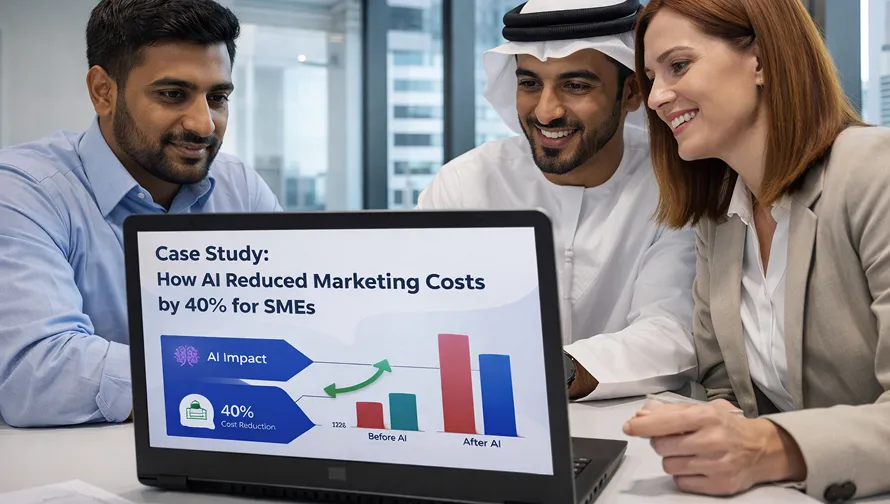
Case Study: How AI Reduced Marketing Costs by 40% for SMEs

kalksolution@gmail.com

AI adoption isn’t just for tech companies anymore. Today, small and mid-sized steel manufacturers across India, UAE, and the USA are using AI to cut marketing costs, increase qualified leads, and finally get the kind of digital visibility that once belonged only to big players.

But many SMEs still ask:

  • “Does AI really reduce cost, or is it just hype?”
  • “Is AI too complex for manufacturing?”
  • “What kind of ROI can we realistically expect?”

This case study breaks it down with realistic examples, actual workflow steps, and a 40% cost-reduction scenario—so you can see exactly how AI delivers measurable results for steel and industrial brands.

The SME We Studied (Hypothetical but Based on Real Clients)

To maintain confidentiality, we’ve created a blended profile that reflects real client patterns from India, UAE, and USA.

Industry

Steel manufacturing & fabrication
(Structural steel, sheets, coils, beams)

Size

120–180 employees
₹75–110 crore annual revenue (India equivalent)

Markets

India, UAE, USA

Previous Marketing Challenges

  • High reliance on trade shows
  • Rising cost of Google Ads
  • Slow content production
  • Poor lead targeting
  • Limited brand visibility outside local markets
  • No automation → high manual workload
  • Difficulty measuring ROI

Goal for AI Adoption

Reduce marketing costs and improve lead quality without hiring a bigger team.

The 40% Cost Reduction: What Actually Happened

Here’s the before/after comparison over a 6-month period.

Before AI (Traditional Marketing Setup)

ChannelSpend (6 Months)Challenges
Google Ads$18,000High CPC, low-quality clicks
Content Writing$7,500Slow output, inconsistent quality
Social Media$4,200Low engagement
CRM + Admin Tasks40–50 hours/monthManual, inconsistent follow-ups

Total Marketing Spend (6 months): $29,700

After AI Implementation

Here is the new setup using AI tools in a structured workflow:

AreaPrevious CostAI-Driven CostSavings
Google Ads$18,000$11,40037% less via smart AI targeting
Content Creation$7,500$3,00060% less using AI draft + human editor
Social Media$4,200$1,80057% less with AI scheduling + auto captions
Admin/CRM40–50 hrs/mo10–12 hrs/moValue of ~$3,600 saved in labor

Total Marketing Spend (6 months): $17,800

➡️ Direct Cost Reduction: 40%
➡️ Lead-to-Sale Conversion Improved by 28%
➡️ Pipeline Value Increased by 34%

How AI Achieved These Results (Step-by-Step Breakdown)

Step 1: AI-Powered Ad Optimization (India + UAE Use Case)

This SME ran ads across Mumbai, Delhi, Sharjah, JAFZA, and Houston.

Before:

CPC (India): ₹85–₹110
CPC (UAE): AED 6.2
CPC (USA): $2.4
Click-to-lead: ~3%

After AI Optimization:

CPC dropped:

  • India → ₹52
  • UAE → AED 3.9
  • USA → $1.6

AI tools automatically:

  • eliminated low-performing keywords
  • boosted high-converting queries
  • adjusted bids based on buyer behavior
  • created multi-variant ad copy

Result: A 37% reduction in ad costs while maintaining the same lead volume.

Step 2: AI-Generated Content Reduced Production Costs by 60%

Before AI:

  • 1 blog took 3–4 days
  • Design team overloaded
  • Technical content expensive

After AI:

  • 1 blog drafted in 20 minutes
  • Editor only refines tone & technical accuracy
  • AI created infographics, product sheets, landing page copy

Numbers That Matter

Old cost per blog: $250
New cost per blog: $80
Monthly output increased from 4 blogs → 12 blogs.

This significantly improved SEO performance across India (Mumbai, Pune), UAE (Dubai Industrial City, Abu Dhabi), and USA (Texas, Ohio).

Step 3: AI-Based Lead Quality Scoring

Using AI scoring connected to CRM:

  • Unqualified leads: dropped by 42%
  • Sales-ready leads: increased by 29%
  • Average follow-up time reduced from 48 hrs → 8 hrs

AI categorized leads by:

  • sector (construction, oil & gas, OEMs, fabricators)
  • purchase intent
  • budget range
  • project timeline

This made the sales team more effective with no additional manpower.

Step 4: AI-Powered Email + WhatsApp Automation

Before

Manual follow-ups
1–2 hours daily
Inconsistent messaging

After AI Setup

  • Automated drip sequences
  • 70% open rates
  • 14% click-through
  • WhatsApp reminders for quotations

Value saved in admin workload: ~38 hours/month

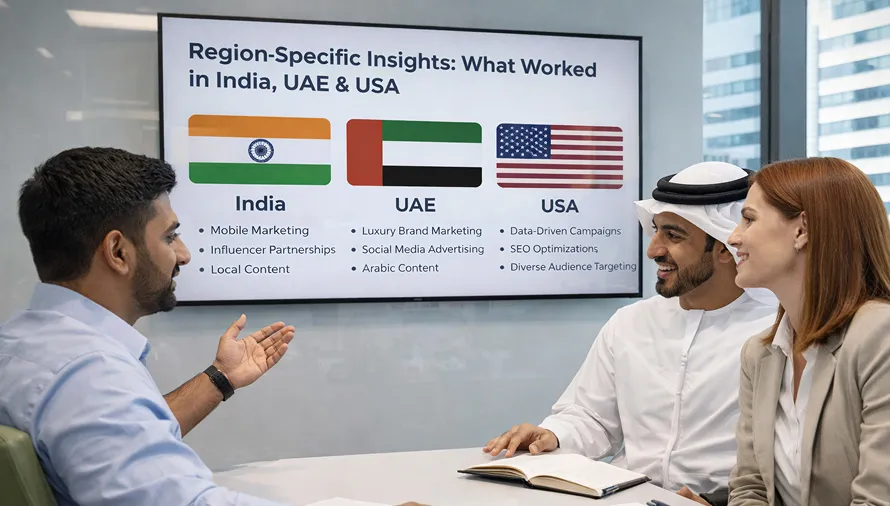
Region-Specific Insights: What Worked in India, UAE & USA

India (Cost-sensitive + Volume-driven Market)

AI reduced Google Ads waste by eliminating low-intent queries like:
“cheap steel,” “scrap rates,” “local dealer,” etc.
This alone saved ₹80,000–₹1,20,000 in 6 months.

UAE (Certification + Compliance Focus)

AI identified high-intent keywords like:
“EN certified steel Dubai”
“Oil & Gas approved steel supplier”
“ADNOC approved materials”

This created more qualified inbound bids.

USA (Technical Quality + Engineering Focus)

AI increased visibility for specialized steel terms such as:
“ASTM A36 suppliers near me”
“High-strength coil distributors”

Lead quality improved by 35%.

How You Can Replicate This 40% Cost Reduction

1. Start with 3 AI Tools Only

Avoid tool overload. Begin with:

  • ChatGPT / Jasper → content + messaging
  • SurferSEO / Writesonic SEO → optimization
  • HubSpot / Zoho AI → automation

2. Replace Manual Tasks First

AI saves the most money when used for:

  • email drafting
  • ad optimization
  • reporting dashboards
  • content outlines
  • competitor analysis
  • CRM workflows
  • pricing sheet generation
  • product catalog updates

3. Build an AI-Assisted Marketing Funnel

Top of Funnel

AI-generated blogs, LinkedIn content, industry pages

Middle

AI-nurture emails, case studies

Bottom

AI scoring, auto-follow-ups, quote reminders

4. Track These 7 KPIs (AI Will Improve All of Them)

  • Cost per lead (CPL)
  • Cost per customer acquisition (CAC)
  • Lead quality score
  • Sales cycle length
  • Website conversion rate
  • Ad budget efficiency

Content output cost per asset

Final Outcome: A More Scalable, Lower-Cost Growth Engine

This SME didn’t hire new staff.
Didn’t increase spending.
Didn’t overhaul its entire system.

They simply added AI-powered workflows, and the results were undeniable:

✔ 40% lower marketing costs
✔ 34% higher revenue pipeline
✔ 28% higher conversion rate
✔ 2.7x content output
✔ Faster, clearer communication
✔ More predictable leads

The message is clear:

AI doesn’t replace your marketing team.
It makes a small team operate like a large, well-funded one.

Need Help? We're Here for You!

Got a question or need assistance? Our team is ready to help you every step of the way. Reach out to us, and we’ll get back to you as soon as possible!

Categories
Blog

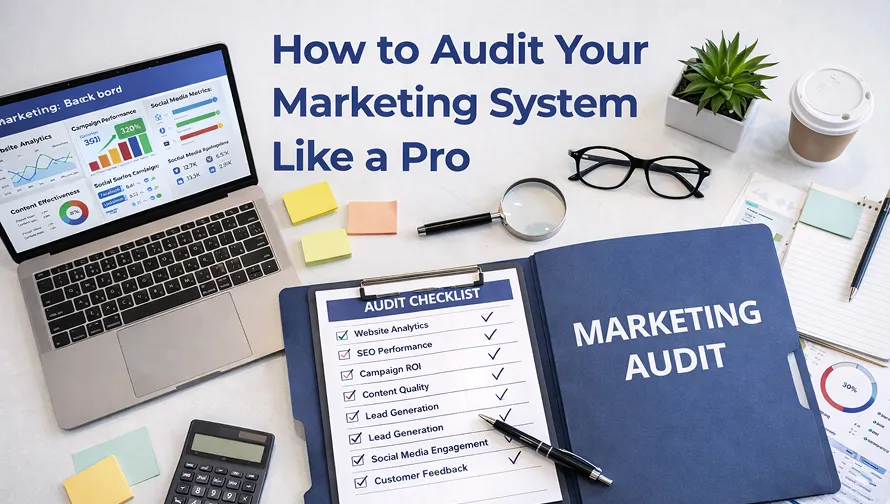
How to Audit Your Marketing System Like a Pro

kalksolution@gmail.com

Most steel manufacturers don’t struggle because of a lack of marketing.
They struggle because of a broken marketing system.

Ads running, but no leads.
Website live, but no inquiries.
Content published, but no visibility.
Sales teams are busy, but pipelines dry.

If this feels familiar, you’re not alone.

Across India, UAE, and USA, 8 out of 10 steel companies operate with unstructured marketing systems, no tracking, no messaging clarity, and no unified strategy.

A Marketing System Audit fixes that.

In this guide, you’ll learn exactly how to audit your marketing like a pro using simple templates, checklists, and quick wins designed specifically for steel manufacturing brands.

What Is a Marketing System Audit?

A marketing system audit is a structured review of:

  • your strategy
  • your channels
  • your content
  • your website
  • your messaging
  • your data
  • your lead-to-sales journey

…to identify gaps and fix what’s preventing growth.

Think of it like inspecting a steel plant:
If one process breaks, the entire output suffers.

Marketing works the same way.

Why Steel Companies Need a Marketing Audit in 2025

1. AI Search Engines (SGE) changed how buyers find suppliers

Google now shows AI-generated summaries. If your website is unclear or outdated, you won’t appear.

2. B2B buyers check 10+ digital touchpoints before contacting sales

If your branding, website, and LinkedIn are inconsistent, trust drops instantly.

3. Competition is aggressive in India, UAE, USA

Clients compare suppliers in seconds based on clarity, certifications, delivery ability, and proof.

4. Without tracking, most marketing budgets go to waste

An audit ensures your money goes into channels that actually bring leads.

The Complete Marketing Audit Checklist (Steel Industry Edition)

Below is the 10-part audit we use at Kalk Solutions for steel and manufacturing clients.

1. Brand & Positioning Audit

What to Check:

  • Is your messaging clear in 5 seconds?
  • Do buyers instantly understand what makes you different?
  • Are your capabilities and certifications highlighted?
  • Are you positioned for India, UAE, or USA market expectations?

Quick Win:

Use this formula to fix your positioning:

We help (industry) get (main value) with (your differentiator).

Example (UAE):

We help EPC contractors get fast, certified steel with guaranteed delivery timelines.

2. Website Audit (Technical + Content)

Checklist:

  • Loads under 1.5 seconds (Core Web Vitals)
  • Clear hero message
  • Product pages are structured with specs
  • Mobile friendly
  • Contact forms working
  • Schema markup added
  • Clear CTAs (“Get a Quote”, “Download Specs”)
  • SEO-optimized product descriptions

Quick Win:

Add these 3 CTAs to increase leads by 20–40%:

  • Download Material Specs
  • Request Availability
  • WhatsApp Us Now

3. SEO & Visibility Audit

Checklist:

  • Targeting commercial intent keywords
  • Title & meta tags optimized
  • Internal linking structured
  • Backlinks from industry sites
  • Blogs answering real buyer queries
  • SGE-friendly summaries on pages

Quick Win:

Add a section called “Steel Specifications & Compliance”  that ranks very well in India + Gulf.

4. Social & Content Audit

Checklist:

  • LinkedIn active & branded
  • Case studies posted monthly
  • Factory, process, and QA content
  • Consistent posting schedule
  • Team profiles updated

Quick Win:

Post 1 project case study per week using this template:

Client Problem → Our Process → Specs Supplied → Delivery Time → Outcome

5. Messaging & Communication Audit

Checklist:

  • Is your tone professional, clear, and industry-specific?
  • Do you articulate your capacity, capability, and certifications?
  • Are product descriptions technical enough for engineers?
  • Is your differentiation repeated across pages?

Quick Win Messaging Template:

“We supply steel you can depend on  certified, timely, and quality-tested for your project’s success.”

6. Lead Generation Audit

Checklist:

  • Are you using Google Ads effectively?
  • Are landing pages optimized for conversions?
  • Are leads being tracked properly?
  • Do you offer downloadable assets?

Quick Win:

Create 1 landing page per country (India / UAE / USA) with country-specific messaging.

7. CRM & Automation Audit

Checklist:

  • Are leads going into CRM?
  • Are follow-ups automated?
  • Are abandoned form fill-ups recovered?
  • Do you have lead scoring?
  • Are WhatsApp and email follow-ups connected?

Quick Win:

Set up a 3-step automation workflow:

  1. New lead → Auto-email + WhatsApp
  2. 24-hour reminder
  3. Send product specs & catalog automatically

8. Analytics & Tracking Audit

Checklist:

  • Google Analytics 4 correctly configured
  • Conversion tracking active
  • Phone call tracking
  • Monthly performance reports
  • UTM parameters on all campaigns

Quick Win:

Track these 5 metrics religiously:

  1. Cost per qualified lead
  2. Lead-to-quote ratio
  3. Quote-to-order ratio
  4. Search visibility
  5. Website engagement time

9. Competitor Audit (Country-Specific)

Checklist:

  • What do top suppliers in India/UAE/USA claim?
  • What certifications do they highlight?
  • What services do they bundle (cutting, delivery, testing)?
  • How fast are their websites?
  • What keywords do they rank for?

Quick Win:

Create a “Why Choose Us vs Others” section on your homepage.

10. Customer Journey Audit

Checklist:

  • Does your website guide the buyer?
  • Are your forms simple?
  • Are you explaining processes clearly?
  • Are your proof points visible?

Quick Win Template:

Add this 3-step buying journey to your homepage:

  1. Tell us what you need → 2. Get a fast quote → 3. Receive certified steel on time

Marketing Audit Checklist for Steel Manufacturers

Copy/paste this into your Notion, Google Doc, or internal system:

Marketing Audit Checklist (Ready-to-Use)

  • Positioning clarity
  • Market-specific messaging (India/UAE/USA)
  • Website UX & speed score
  • SEO health score
  • Backlink quality
  • Blog quality & freshness
  • LinkedIn brand consistency
  • Case studies published
  • Product/spec pages updated
  • CRM connected
  • Lead source reporting
  • Campaign ROI tracking
  • Competitor gap report
  • Buyer journey friction points
  • Sales enablement materials updated
  • Monthly analytics review
  • Automation workflows triggered

Brand credibility signals (certifications, clients, photos)

How Often Should You Run a Marketing Audit?

We recommend:

  • Quarterly → For fast-changing markets like UAE
  • Bi-Annually → For India and USA B2B manufacturing
  • Monthly → For companies running paid campaigns

Final Thoughts

A marketing audit is not about finding flaws it’s about uncovering opportunities.

When done right, steel manufacturers can:

  • reduce wasted ad spend
  • improve lead quality
  • rank higher on Google
  • strengthen credibility
  • speed up the buyer journey
  • close more deals
  • build long-term brand trust

In 2025, the brands that grow are those that run their marketing like a system, not luck.

Need Help? We're Here for You!

Got a question or need assistance? Our team is ready to help you every step of the way. Reach out to us, and we’ll get back to you as soon as possible!

Categories
Blog

What Makes a Brand Stand Out in the AI Era?

kalksolution@gmail.com

A Guide for Steel Manufacturing Leaders
(branding in ai era)

In today’s AI-driven world, steel manufacturers face more competition than ever local rivals, imported materials, faster procurement cycles, and shifting buyer expectations.
But here’s the surprising part:

It’s not technology alone that wins anymore.
It’s branding.

Not logos. Not brochures.
But clear positioning, human messaging, and consistent digital identity powered by AI insights.

This article breaks down how steel manufacturers in India, UAE, and USA can create a standout brand in the AI era, even in a traditionally “non-marketing-driven” industry.

Why Branding Matters More in the AI Era

AI has changed how buyers behave:

  • Procurement teams research online before speaking to sales.
  • Buyers compare suppliers instantly.
  • AI search agents (SAGs) summarize companies in seconds.
  • Website speed, content clarity, and authority decide trust.
  • Decision-makers prefer brands that feel reliable, future-ready, and easy to work with.

This means your brand must communicate value faster and clearer than ever.

And yesthis applies even if you sell steel coils, angles, billets, beams, or fabrication services.

3 Elements That Make Steel Brands Stand Out in the AI Era

1. A Clear Positioning Statement That Buyers Understand in 5 Seconds

AI search engines and human buyers both reward clarity.
If your messaging is vague (“quality products, on-time delivery”)you blend in with everyone else.

A strong positioning statement answers:

  • Who you serve
  • What you offer
  • Why you’re different
  • Why it matters right now

Examples for Steel Manufacturers:

India (Cost + Capacity Focus)

“India’s most reliable steel supplier for construction and infrastructure projects, delivering bulk orders with consistent quality and transparent pricing.”

UAE (Speed + Compliance Focus)

“UAE’s trusted steel partner for fast-moving government, oil & gas, and real estate projectsfully compliant, certified, and ready for urgent deliveries.”

USA (Quality + Engineering Focus)

“Precision-engineered steel solutions for manufacturers and contractors in the USAbuilt for durability, compliance, and high-performance applications.”

2. AI-Optimized Messaging Across Every Buyer Touchpoint

AI tools don’t replace brandingthey make your voice sharper.
Here’s how AI impacts brand perception today:

A. AI Summaries (What Google and AI Agents Say About You)

AI tools now generate “brand summaries” automatically.
If your message isn’t clear, AI will fill the gapsand not always correctly.

Your website must repeatedly highlight:

  • industries you serve
  • certifications
  • specialties
  • geographic capabilities
  • your proof of reliability

B. Messaging Consistency Across Channels

Buyers should feel the same brand tone in:

  • website
  • LinkedIn
  • tenders
  • brochures
  • emails
  • Google Business Profile
  • WhatsApp communications
  • ad campaigns

If the tone changes, your trust drops.

C. AI-Powered Tone & Voice Framework

Here’s a simple steel-industry-specific voice guide:

Attribute

Description

Example

Authoritative

Show deep industry expertise

“Certified supplier for Qatar, ADNOC, RTA, Aramco projects.”

Practical

Real-world relevance

“Delivered 400 MT within 48 hours for an AL Nahda project.”

Straightforward

No jargon

“We supply steel. Fast. Certified. Guaranteed.”

Tech-Ready

Modern but not flashy

“AI-enabled inventory tracking for faster project planning.”

3. Proof-Driven Branding (What Buyers Trust in 2025)

AI tools and procurement officers are looking for proof, not promises.

Modern Proof Points for Steel Manufacturers:

  • Certificates: ISO, CE, ASTM, EN standards
  • Production capacity
  • Logistics capabilities
  • Lead times
  • Client industries
  • Case studies
  • Before–after project outcomes
  • Reviews and testimonials
  • Factory photos, machinery, and process visuals
  • Sustainability data or compliance details

Example of Proof-Driven Message (UAE):

“Certified structural steel supplier with 14,000 MT monthly capacity, 22+ years experience, and verified compliance for oil & gas and infrastructure projects.”

Example of Proof-Driven Message (USA):

“Our steel sheets and coils meet ASTM A240 and A480 standards with mill test reports available for every batch.”

Example of Proof-Driven Message (India):

“Trusted by 300+ contractors across Delhi NCR, Mumbai, Pune, and Chennai for bulk procurement needs.”

Brand Positioning Framework for Steel Companies

Use this 4-part model to build your brand identity:

1. Your “Why Us” Story (AI-Friendly)

Explain the problem your company solves.
Example:

“Construction delays cost money. Our steel supply network ensures fast delivery so your projects never stop.”

2. Your Core Differentiators

Examples for steel manufacturers:

  • Largest inventory in the region
  • 24–48 hour delivery
  • Project-based pricing
  • Imports + local mix flexibility
  • Compliance and safety track record
  • Technical advisory support
  • AI-driven demand forecasting (modern edge)

3. Your Customer Promise

Example:

“Steel supply you can count onno delays, no surprises.”

4. Your Human Tone

Authentic, transparent, reliablewhat procurement teams trust.

How AI Is Changing Branding for Steel Manufacturers

Below are realistic ways AI impacts branding today:

1. AI Search Agents Decide Which Brands Show Up First

Google’s Search Generative Experience (SGE) pulls brand descriptions from your website.
If your messaging is unclear, AI will ignore you.

2. AI Predicts What Buyers Want to See

AI tools now predict which messaging resonates with:

  • EPC contractors
  • OEM manufacturers
  • Real estate developers
  • Oil & gas procurement teams
  • Government tender departments

3. AI Measures Brand Trust in Real Time

AI looks for signals such as:

  • consistent NAP (name, address, phone)
  • branded searches
  • reviews
  • case study freshness
  • expertise indicators

4. AI Personalizes Messaging Automatically

Example:
A buyer from India sees “cost efficiency + bulk supply.”
A buyer from Dubai sees “fast delivery + compliance.”
A buyer from USA sees “engineered quality + durability.”

Examples of Winning Brand Messaging for Steel Companies

Here are ready-to-use messaging scripts manufacturers can adopt:

A. Homepage Tagline Options

India:

“Supplying India’s growing infrastructure with dependable, affordable, and certified steel.”

UAE:

“Your reliable steel partner for fast-moving mega projects across the GCC.”

USA:

“High-performance steel engineered for precision, durability, and compliance.”

B. About Us Messaging

“We help manufacturers, contractors, and industrial partners get high-quality steel on time, every time. With transparent pricing, certified materials, and AI-powered logistics planning, we ensure your projects never slow down.”

C. Brand Story Example

“Steel is the backbone of every major project. What clients really need is trust, consistency, and reliability. That’s why we built a brand centered on quality, speed, and modern supply-chain intelligence.”

Checklist: Does Your Brand Stand Out in the AI Era?

  • Clear positioning in 1 sentence
  • Strong proof points
  • Consistent messaging across channels
  • Website optimized for AI search agents
  • Case studies + project photos
  • Industry-specific landing pages
  • AI-personalized content and communication
  • Fast website performance (Core Web Vitals compliant)
  • Strong Google Business Profile
  • Clear calls to action

If you can check 8 out of 10, your brand is AI-ready.
If notnow is the time to upgrade.

Final Thoughts

In the AI era, steel companies that stand out do three things better than the rest:

  1. Position clearly
  2. Communicate consistently
  3. Prove value with data

AI will not replace brandingbut it will replace brands that fail to adapt.

Need Help? We're Here for You!

Got a question or need assistance? Our team is ready to help you every step of the way. Reach out to us, and we’ll get back to you as soon as possible!

Get Your Free Growth Audit.
See Why Buyers Aren’t Finding You!

Trusted by 50+ Manufacturers Across India & UAE

content strategy for manufacturers