Categories
Blog

7 Mistakes Manufacturers Make in Going Digital (and How to Avoid Them)

Blog

Why Going Digital Isn’t Always Smooth for Manufacturers

Digital transformation has become the defining opportunity for India’s steel and manufacturing industry. From predictive maintenance and smart factory automation to AI-powered marketing and CRM systems, the possibilities are endless.

Yet, many manufacturers jump into “going digital” without a structured plan and end up facing expensive setbacks, wasted time, and frustrated teams.

At Kalk Solutions, we’ve helped steel and industrial businesses in India transition successfully from manual systems to digital-first operations. Along the way, we’ve identified seven common mistakes manufacturers make during digital transformation and how you can avoid them with practical, cost-effective steps.

1. Mistake: Starting Without a Clear Digital Roadmap

Many manufacturing leaders begin digital initiatives reactively by installing an ERP, CRM, or automation tool without a long-term plan.

The problem:
Without defined goals or milestones, digital projects often lose direction, making it difficult to track ROI or progress.

How to fix it:

  • Start with a digital audit: Assess your operations, data readiness, and technology gaps.
  • Define SMART goals e.g., “Reduce downtime by 15% in 6 months” or “Automate quality tracking by Q2.”
  • Create a roadmap that aligns tech upgrades with business priorities not the other way around.

Tip: Use a simple 6–12 month roadmap with quarterly check-ins. Kalk Solutions provides ready-to-use templates for SME manufacturers.

2. Mistake: Overinvesting in Technology Too Early

Many SMEs believe digital transformation means expensive IoT systems, AI bots, or robotics. But for most, those come later in the journey.

The problem:
High upfront investments often lead to underutilized systems, poor adoption, and low ROI.

How to fix it:

  • Start small implement affordable tools first (like cloud-based CRMs, digital dashboards, or basic IoT sensors).
  • Scale gradually as you measure success.
  • Always calculate the ROI of each tool before purchase.

Example: A mid-size steel supplier in Gujarat cut costs by starting with cloud ERP integration before investing in IoT machinery, saving ₹12 lakhs annually.

3. Mistake: Ignoring Employee Training and Change Management

Your people make or break digital transformation. Technology alone doesn’t change anything unless your team knows how (and why) to use it.

The problem:
Untrained staff revert to old manual methods, leading to errors, delays, and tool misuse.

How to fix it:

  • Involve employees from day one.
  • Conduct regular digital training sessions especially for supervisors and machine operators.
  • Appoint a “Digital Champion” in each department to track adoption and feedback.

Tip: The Skill India Digital Manufacturing Initiative offers free upskilling modules for manufacturing teams.

manufacturing perception improvement

4. Mistake: Not Integrating Systems and Data

Many manufacturers digitize processes in silos one software for inventory, another for HR, another for sales but none talk to each other.

The problem:
Disconnected systems cause data duplication, inefficiency, and poor decision-making.

How to fix it:

  • Choose integrated platforms (e.g., Zoho One, SAP Business One, or TallyPrime with CRM add-ons).
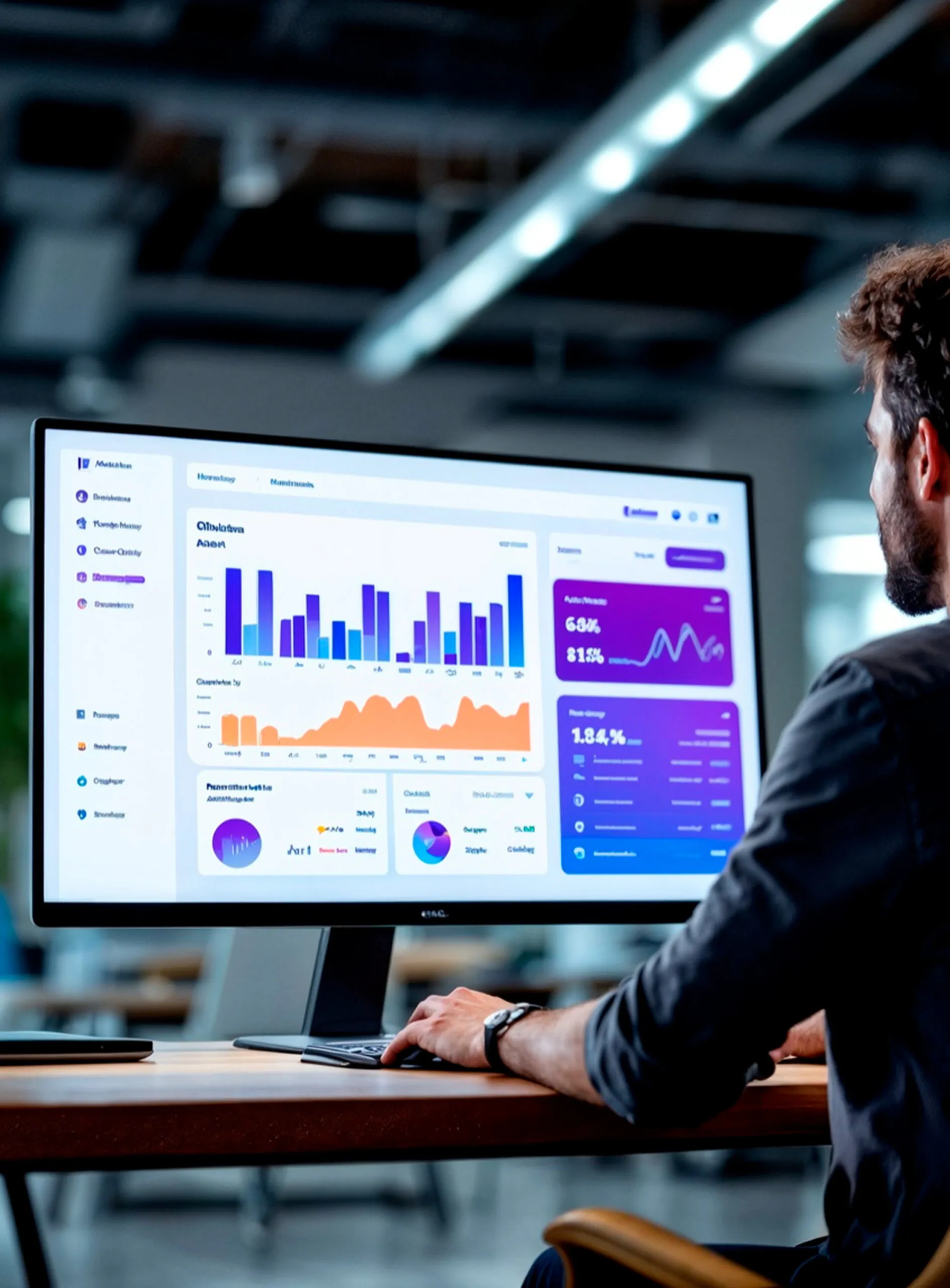
  • Centralize your data dashboards one view for production, inventory, and sales metrics.
  • Regularly audit data consistency across departments.

Pro Tip: Kalk Solutions helps manufacturers set up data integration pipelines that connect existing tools instead of replacing them saving both cost and time.

5. Mistake: Neglecting Cybersecurity

As factories become more connected, cybersecurity becomes non-negotiable. Unfortunately, many SMEs still use shared logins, outdated systems, or unsecured Wi-Fi networks.

The problem:
Even a minor data breach can halt operations, leak client data, or damage trust.

How to fix it:

  • Use strong authentication (MFA) across systems.
  • Update passwords and software quarterly.
  • Train staff to spot phishing and suspicious activity.
  • Partner with a cybersecurity consultant familiar with industrial systems.

💡 Tip: The Ministry of MSME’s Digital Security Assistance Scheme (DSAS) offers partial reimbursement for small-scale cybersecurity investments.

6. Mistake: Measuring the Wrong Metrics (or None at All)

Digital transformation should produce measurable improvements not vanity metrics.

The problem:
Many manufacturers track “number of tools implemented” instead of operational or financial outcomes.

How to fix it: Measure ROI based on clear KPIs such as:

  • Production downtime reduction
  • Cost per unit decrease
  • Inquiry-to-order conversion rate
  • Energy efficiency per ton produced

Review progress every quarter and adjust tools or workflows accordingly.

Example: A fabrication SME in Pune saw a 22% increase in output after tracking machine utilization through IoT data without increasing labor hours.

7. Mistake: Treating Digital Transformation as a One-Time Project

Digital transformation is an ongoing process, not a one-off investment. Many companies stop after their first implementation phase, missing out on continuous improvement.

The problem:
Lack of iteration leads to stagnation, outdated tools, and missed innovation opportunities.

How to fix it:

  • Review and update your systems annually.
  • Keep exploring new automation and AI-based opportunities.
  • Encourage innovation teams or internal task forces to test emerging tools.

Tip: Treat digital transformation like product development prototype, test, and scale what works.

Checklist: Practical Steps to Avoid These Mistakes

Here’s a quick Digital Transformation Health Check for your manufacturing business:

Area

Check if…

Digital Roadmap

You have a written 6–12 month plan with KPIs

Tech Investment

Every tool purchase has a projected ROI

Employee Adoption

Your team is trained and using tools daily

System Integration

Data flows between departments seamlessly

Cybersecurity

Access controls, backups, and updates are active

Performance Metrics

You review key efficiency and sales KPIs quarterly

Continuous Improvement

You have a plan for ongoing digital upgrades

Practical Mitigation Timeline (6 Months)

Month

Focus Area

Action Plan

1

Audit & Goal Setting

Conduct digital readiness audit + set goals

2

Tool Selection

Choose affordable, scalable software

3

Implementation

Begin system setup & data digitization

4

Training & Adoption

Conduct staff training + internal workshops

5

Integration

Connect CRM, ERP, and IoT systems

6

Optimization

Review KPIs, refine strategy, plan next steps

Conclusion – Digital Done Right Means Sustainable Growth

The road to digital transformation isn’t about rushing to adopt every new technology it’s about building smarter, more connected operations step by step.

For manufacturers in the steel and industrial sector, avoiding these seven mistakes ensures that your digital journey delivers real value reduced costs, improved efficiency, and stronger competitiveness.

At Kalk Solutions, we specialize in helping manufacturers across India transform digitally strategically, affordably, and sustainably. From digital audits to AI-driven marketing and ERP setup, we help you turn transformation into tangible growth.

📩 Let’s make your digital transformation mistake-free.
Contact Kalk Solutions today to build your customized digital success roadmap.

industrial brand manuals
Need Help? We're Here for You!

Got a question or need assistance? Our team is ready to help you every step of the way. Reach out to us, and we’ll get back to you as soon as possible!
Categories
Blog

Industry 4.0: Step-by-Step Implementation Plan for SMEs

Blog

Why SMEs Can’t Afford to Delay Industry 4.0 Adoption

In India’s rapidly growing manufacturing ecosystem, Industry 4.0 is no longer a futuristic concept it’s a necessity.
Yet, most small and medium enterprises (SMEs), especially in the steel and heavy manufacturing sector, still see digital transformation as “too costly” or “too complex.”

But here’s the truth: you don’t need a multimillion-dollar setup to become an Industry 4.0-ready business. What you need is a clear roadmap, practical tools, and the right execution plan that fits your current scale.

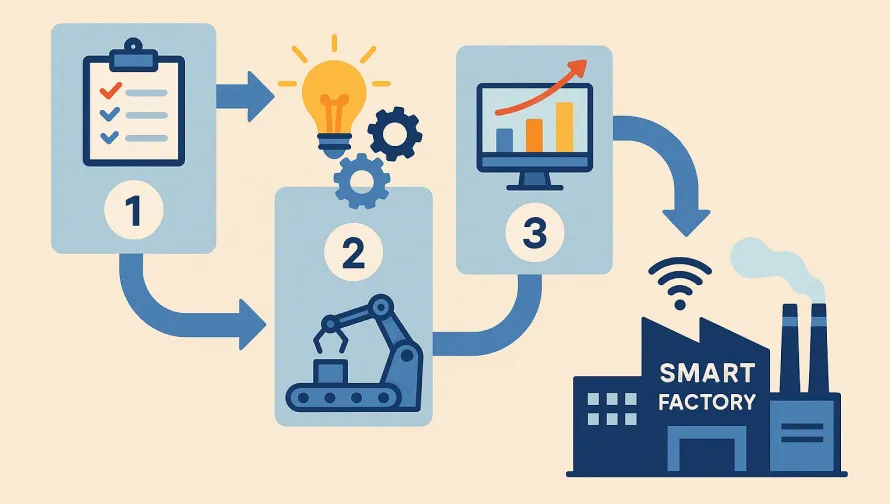
This guide will break down in simple, actionable steps how Indian SMEs can implement Industry 4.0 technologies with a checklist, timeline, and measurable milestones, while staying budget-conscious.

What Is Industry 4.0 and Why It Matters for SMEs

Industry 4.0 represents the fourth industrial revolution the integration of digital technologies like IoT (Internet of Things), AI, data analytics, and automation into manufacturing operations.

For steel and manufacturing SMEs, it means:

  • Reducing downtime through predictive maintenance
  • Improving product quality with data insights
  • Digitizing operations for real-time tracking
  • Enhancing supply chain efficiency

Fact: According to the Ministry of Heavy Industries (India), SMEs that adopted Industry 4.0 practices saw a 20–35% improvement in operational efficiency within one year.

Challenges SMEs Face (And How to Overcome Them)

Before jumping into implementation, let’s address the biggest concerns Indian SMEs face:

Challenge

Common Issue

Solution

Limited budget

Can’t afford large automation systems

Start small use affordable IoT sensors, cloud tools, and ERP systems

Lack of digital skills

Teams aren’t trained

Upskill staff through free MSME & Skill India programs

Legacy systems

Old machinery and manual data

Add sensors and APIs instead of replacing equipment

Fear of disruption

Operations may slow down during transition

Implement in phases with clear milestones

Key takeaway: Start with scalable, low-cost solutions not full overhauls.

Industry 4.0 Implementation Plan for SMEs (Step-by-Step)

Below is a 6-step roadmap for implementing Industry 4.0 in your manufacturing business from assessment to measurable ROI.

Step 1: Assess Your Current Readiness
Before investing, evaluate where your factory currently stands.

Checklist:

  • Is your machinery compatible with digital tracking or sensors?
  • Are your operations recorded manually or digitally?
  • Do you already use ERP or CRM systems?
  • How is production data stored and used?

Tool Tip: Use “Industry 4.0 Readiness Assessment” from the Ministry of MSME or Kalk Solutions’ free digital audit template.

Timeline: 2 weeks
Example: A steel fabrication SME in Pune found 70% of its processes were still manual but could integrate IoT sensors without machinery replacement.

Step 2: Define Your Digital Goals and KPIs
Digital transformation must align with your business priorities not just technology trends.

Example Goals:

  • Reduce production waste by 10% in 6 months
  • Automate inventory management within 3 months
  • Increase output per shift by 15% through machine monitoring

Set measurable KPIs:

  • Downtime hours
  • Machine utilization rate
  • Lead time reduction
  • Cost per unit

Timeline: 1 week

Step 3: Choose the Right Technology Stack (Start Small)
SMEs don’t need advanced robotics to implement Industry 4.0. Start with modular, scalable tools that give maximum ROI.

Recommended low-cost tools for SMEs:

Category

Example Tools/Technologies

Cost Range

IoT Sensors

Siemens MindSphere, Arduino IoT Cloud

₹10,000–₹50,000 per machine

Data Collection

Google Sheets + Power BI dashboards

Free to ₹2,000/month

ERP/CRM

Zoho ERP, TallyPrime, HubSpot

₹1,000–₹5,000/month

Predictive Analytics

ChatGPT, Tableau, Microsoft Copilot

Free–₹3,000/month

Maintenance Tracking

Fiix CMMS, MaintainX

Free–₹1,500/month

Pro tip: Choose tools that integrate easily with your existing systems to avoid large IT investments.

Timeline: 2–3 weeks

Step 4: Digitize and Automate Key Processes
Start with the highest-impact areas first those that cause frequent delays, errors, or inefficiencies.

Quick wins for steel and manufacturing SMEs:

  • Install IoT sensors for monitoring temperature, vibration, or load.
  • Automate reports using Google Data Studio or Power BI.
  • Digitize your maintenance logs instead of paper-based records.
  • Use barcode systems for raw material and finished goods tracking.

Timeline: 1–2 months
Example: A fabrication plant in Gujarat reduced 40% of manual report errors after digitizing quality control using QR-based tracking.

Step 5: Train Your Team and Build a Digital Culture
Technology adoption fails if your team isn’t ready for it.

Checklist for training phase:

  • Train supervisors on IoT dashboards and data entry
  • Educate machine operators about data importance
  • Encourage reporting of insights and suggestions
  • Assign a “Digital Champion” internally

Local Incentive: The Skill India Program and MSME Champions Scheme offer free digital upskilling workshops for factory employees.

Timeline: 1 month
Tip: Start weekly “digital review meetings” to track adoption progress and identify improvement areas.

Step 6: Monitor, Optimize, and Scale
Once systems are running, focus on data-driven optimization.

Key monitoring metrics:

  • Machine efficiency (OEE%)
  • Unplanned downtime
  • Energy consumption per output unit
  • Lead time from order to dispatch

Scale-up strategy:

  • Connect all departments under one ERP system.
  • Add AI analytics to forecast demand or maintenance schedules.
  • Integrate supply chain partners for real-time collaboration.

Timeline: Continuous (review every 3 months)
Example: After 6 months, a medium-scale steel supplier in Tamil Nadu integrated AI-based forecasting, reducing stockouts by 22%.

industry-focused brand communication

Industry 4.0 Implementation Timeline (6-Month Roadmap)

Month

Key Focus

Milestones

Month 1

Digital Readiness & Goal Setting

Complete readiness audit + define KPIs

Month 2

Tech Selection

Choose IoT, ERP, or automation tools

Month 3–4

Implementation

Deploy tools + start digital data collection

Month 5

Training & Cultural Adoption

Upskill team + internal champions

Month 6

Optimization & Scale

Evaluate results, optimize systems, expand usage

Note: Keep the process agile adjust based on performance and feedback.

Government Incentives for Industry 4.0 in India (2025 Update)

Scheme

Benefit

Eligibility

MSME Champions 4.0 Initiative

25–50% subsidy for digital adoption and IoT setup

Registered MSMEs

SAMARTH Udyog Bharat 4.0

Access to Smart Factory demo centers and consultation

Manufacturing units

Digital India MSME Program

Grants for ERP and cloud system implementation

Small to mid-sized enterprises

Skill India Digital Manufacturing Training

Free training for workforce on Industry 4.0 tech

MSMEs & industrial clusters

Common Mistakes to Avoid

  • Trying to do everything at once
  • Buying expensive tools without assessing ROI
  • Ignoring staff training and process alignment
  • Not setting measurable performance goals

Remember: Industry 4.0 is a journey, not a one-time project.

Conclusion – Future-Proofing Your SME for the Next Decade

By 2030, nearly 70% of manufacturing output in India will involve some level of Industry 4.0 integration from IoT-driven production to AI-based decision-making.

For steel and industrial SMEs, early adoption isn’t just a competitive advantage it’s a growth multiplier.

With the right step-by-step implementation plan, clear ROI tracking, and support from government incentives, even small factories can transform into data-driven smart enterprises without overspending.

At Kalk Solutions, we help Indian manufacturers design and execute affordable Industry 4.0 roadmaps, combining strategy, automation, and digital marketing for measurable growth.

📩 Let’s build your Industry 4.0 roadmap together.
Contact Kalk Solutions today for a customized digital transformation audit.

engineering high-ticket branding
Need Help? We're Here for You!

Got a question or need assistance? Our team is ready to help you every step of the way. Reach out to us, and we’ll get back to you as soon as possible!
Categories
Blog

How Indian Manufacturers Can Digitally Transform with Minimal Investment

Blog

Why Digital Transformation Is No Longer Optional

India’s manufacturing and steel industry is evolving faster than ever. From Bharat’s push for “Make in India 2.0” to the rise of smart factories, every industrial leader now faces the same question:

How can we go digital without breaking the bank?
The truth is, digital transformation doesn’t always require massive budgets or complex technologies. What it really needs is the right strategy, phased execution, and the willingness to adapt.

At Kalk Solutions, we’ve worked with multiple steel and manufacturing companies across India helping them adopt digital tools, streamline operations, and build stronger B2B visibility with minimal investment.

This guide shows how Indian manufacturers can achieve digital transformation efficiently, step by step while staying practical, data-smart, and cost-conscious.

Understanding Digital Transformation in Manufacturing

Digital transformation means using technology to improve how your business operates, produces, and connects with customers.

For manufacturers, this can include:

  • Automating manual processes (inventory, procurement, or sales tracking)
  • Implementing CRM and ERP tools for better decision-making
  • Using digital marketing to reach new clients globally
  • Leveraging data analytics for production and demand forecasting

You don’t need to invest in Industry 4.0 robots right away start with digital systems that deliver immediate ROI.

Why Digital Transformation Is Urgent for Indian Steel Manufacturers

The Indian steel and heavy manufacturing sector is at a turning point:

  • Government Push: “Digital India” and PLI (Production Linked Incentive) schemes reward tech adoption.
  • Competition: Global clients now prefer suppliers with digital processes and transparent data systems.
  • Efficiency: Manual operations lead to higher costs and missed deadlines.

Local Incentive Example:
Under India’s MSME Digital Growth Initiative, small and mid-size manufacturers can access subsidies and tax benefits when adopting ERP software or digital marketing systems.

Takeaway: Start small but start now. Even modest digital improvements can drastically reduce inefficiencies and open new B2B opportunities.

Step-by-Step: How to Digitally Transform with Minimal Investment

Step 1: Start with Digital Presence (Website + SEO)
Your website is your 24/7 sales representative.
Many Indian steel companies still rely only on WhatsApp or trade platforms, losing out on credibility.

Low-cost actions:

  • Build or update a professional, mobile-friendly website.
  • Optimize it for SEO keywords like “steel suppliers in India” or “fabrication contractors near me.”
  • List on Google My Business and industry directories.

Result: Clients find you faster, inquiries increase, and you start generating organic leads.

Step 2: Automate Sales & Customer Management (CRM Systems)
Instead of relying on Excel sheets or manual follow-ups, use affordable CRMs like Zoho CRM, HubSpot Free, or TallyPrime.

What this does:

  • Tracks all inquiries and client interactions in one place.
  • Sends automatic reminders and quotes.
  • Provides data for sales forecasting.

Cost: Starting from ₹0/month (for basic CRM plans)
ROI: 30–40% improvement in lead follow-up and customer retention.

Step 3: Embrace Digital Marketing Over Traditional Ads
Traditional ads in trade magazines or exhibitions cost lakhs and offer no measurable ROI.

Instead:

  • Run LinkedIn ads targeting procurement heads, engineers, or developers.
  • Use email marketing to nurture past leads.
  • Invest in content marketing share case studies, videos, and insights.

Budget Tip: Even a monthly spend of ₹15,000–₹25,000 on Google Ads or SEO can generate measurable results within 3 months.

Step 4: Adopt Predictive Analytics and AI Tools
Once you’ve collected enough data, tools like Google Analytics 4, ChatGPT, or HubSpot AI can predict trends and guide smarter decisions.

Example Use Case for a Steel Company:
“Which regions are most likely to demand structural steel next quarter?”
Predictive analytics can forecast demand based on project pipelines, past inquiries, and online search trends.

ROI Impact: Better forecasting = optimized inventory + reduced idle costs.

Step 5: Digitize Operations Gradually
You don’t need a full-scale factory automation system immediately. Start with basic digital systems:

  • Implement barcoding for material tracking
  • Use IoT-based temperature or quality sensors (available under MSME subsidies)
  • Integrate accounting software with logistics dashboards

Government Incentive:
The Ministry of Heavy Industries’ Digital Manufacturing Initiative provides up to 25% financial support for adopting smart manufacturing systems under the Industry 4.0 framework.

industrial brand loyalty creation

Case Study: How One Indian Steel Fabricator Digitally Transformed in 6 Months

Client: Mid-sized steel fabrication firm, Pune
Challenge: Manual marketing and project coordination led to missed leads and slow sales.
Solution (via Kalk Solutions):

  • Built a search-optimized website with lead capture tools
  • Integrated HubSpot CRM for inquiry automation
  • Ran a targeted LinkedIn campaign for builders and architects
    Result:
  • Website inquiries grew 3.8x in 90 days
  • Sales coordination time dropped by 45%

Monthly revenue increased by 27%, all with under ₹80,000 in total digital investment

Local Incentives for Manufacturers in India (2025 Update)

Here are some government-backed programs that can help manufacturers digitize affordably:

Scheme/Initiative

Benefit

Eligibility

MSME Digital Growth Scheme

Up to 50% subsidy for ERP or CRM adoption

MSME Registered Units

Make in India 2.0 – Digital India Program

Financial incentives for adopting AI/IoT-based systems

Manufacturing units with export focus

Technology Upgradation Fund (TUF)

20–25% reimbursement on digital system purchases

Small to mid-sized factories

Startup India for Industry 4.0

Tax exemption for new digital ventures

Startups under 10 years old

Tip: Even if you’re a medium enterprise, collaborating with a tech partner like Kalk Solutions helps structure digital adoption plans aligned with government incentives.

How to Measure ROI of Digital Transformation

Digital doesn’t mean spending more it means spending smarter.
Track your progress using these ROI indicators:

Metric

Before Digitalization

After Digitalization (6 months)

Lead response time

2–3 days

Instant (automated)

Customer acquisition cost

₹4,000–₹6,000

₹1,800–₹2,200

Inquiry-to-order conversion rate

2%

6–8%

Operational errors

Frequent manual errors

Reduced by 50%+

Result: Within months, digital transformation starts paying for itself.

Kalk Solutions’ Approach to Cost-Effective Digital Transformation

At Kalk Solutions, we focus on practical digital adoption, not expensive tech overhauls.

Our process:

  1. Audit your current systems (sales, marketing, and operations)
  2. Identify digital quick wins with the highest ROI
  3. Set up AI tools, CRMs, and marketing systems within your budget
  4. Train your internal teams for sustainability

We’ve helped Indian manufacturers in steel, prefab, and heavy engineering build full digital ecosystems starting under ₹1 lakh with visible results in under 90 days.

Conclusion – Digital Transformation Is Affordable, Achievable & Essential

In 2025, digital transformation isn’t about having the biggest tech budget it’s about making smarter, data-driven moves that increase visibility, reduce inefficiency, and future-proof your business.

For Indian manufacturers, especially in the steel and construction ecosystem, the digital path is clear:

  • Start small
  • Leverage incentives
  • Build systematically

At Kalk Solutions, we help Indian manufacturers digitally transform with minimal investment combining AI-powered marketing, automation tools, and practical strategies for long-term growth.

📩 Let’s make your business the next success story.
Contact Kalk Solutions today to build your digital roadmap affordably and efficiently.

branding for long sales cycle industries
Need Help? We're Here for You!

Got a question or need assistance? Our team is ready to help you every step of the way. Reach out to us, and we’ll get back to you as soon as possible!
Categories
Blog

Predictive Analytics in Marketing: A Beginner’s Guide for the Steel Manufacturing Industry (2025 Edition)

Blog

Introduction – The Power of Predictive Thinking in Modern Marketing

In today’s competitive B2B landscape, especially for steel and manufacturing companies, marketing can no longer rely on assumptions or generic outreach. Decision-makers demand data-backed precision — knowing who’s likely to buy, when, and why.

That’s where predictive analytics in marketing comes in.

Predictive analytics uses AI, data modeling, and machine learning to forecast customer behavior, market trends, and campaign outcomes — helping businesses make smarter marketing decisions.

At Kalk Solutions, we’ve helped steel manufacturers, fabricators, and industrial suppliers implement predictive models that turn raw data into reliable growth strategies.

If you’re new to this concept, this guide will help you understand what predictive analytics is, how it works, and how it can transform marketing in the manufacturing and steel industries.

1. What Is Predictive Analytics in Marketing?

Predictive analytics marketing is the process of analyzing historical data — like website visits, customer interactions, and campaign results — to predict future outcomes.

In simpler terms, it answers questions such as:

  • Which clients are most likely to buy next quarter?
  • What kind of campaigns will deliver the highest ROI?
  • Which leads will turn into long-term customers?

It’s not about guessing — it’s about forecasting behavior using data and AI.

2. How Predictive Analytics Works in Marketing

Predictive analytics follows a three-step process:

Step 1: Data Collection
Collect data from various sources — CRM systems, email campaigns, ad analytics, social media, and sales history.

Step 2: Pattern Identification
AI algorithms find relationships between customer actions and outcomes — for example, identifying that contractors who visit your “steel fabrication” page twice are 60% more likely to request a quote.

Step 3: Prediction and Action
Once patterns are identified, predictive models can forecast what’s likely to happen — allowing your marketing team to take action before opportunities are missed.

3. Real-World Use Case: Predictive Analytics in Steel Manufacturing Marketing

Let’s look at a practical example from the steel industry.

Challenge:
A steel supplier in India struggled to identify which leads from Google Ads were actually worth pursuing. Sales teams were wasting time on low-quality leads.

Solution:
By implementing predictive analytics with Kalk Solutions, the system began tracking engagement data such as:

  • Time spent on the pricing page
  • Product categories viewed (e.g., structural steel, prefab units)
  • Downloaded brochures or contact form interactions

The predictive model then scored each lead based on conversion likelihood.

Results:

  • Lead qualification time reduced by 40%
  • Marketing ROI improved by 2.5x
  • Sales team focused only on high-intent leads

Takeaway: Predictive analytics helped the company shift from reaction-based marketing to anticipatory marketing — knowing what the customer wanted before they even reached out.

manufacturing branding firms

4. Top Marketing Applications of Predictive Analytics

Here’s how predictive analytics can revolutionize marketing for manufacturing and steel companies:

a. Predictive Lead Scoring
Prioritize leads that are most likely to convert, based on behavioral and demographic data.

Example Prompt:
“Show leads who viewed our steel product catalog and returned to the site within 7 days.”

b. Campaign Performance Forecasting
Predict which campaign types will generate the best results before you spend.

Example Insight:
Predictive tools may reveal that LinkedIn Ads targeting project managers perform 3x better than cold email outreach.

c. Customer Retention Prediction
Anticipate when a long-term client might stop ordering — and re-engage them with personalized offers.

Example:
If a client’s order frequency drops by 25%, the model alerts marketing to run a retention campaign.

d. Product Demand Forecasting
Plan inventory and promotions more efficiently by predicting which products will be in demand.

Example:
“Demand for prefabricated steel units increases by 15% in Q2 — plan campaigns accordingly.”

5. Predictive Analytics Tools You Can Start With

Even if you’re new to analytics, several tools make predictive marketing easier for industrial brands:

Tool

Best For

Key Benefit

HubSpot Marketing Hub

Lead scoring and behavior tracking

Seamless CRM integration

Google Analytics 4 (GA4)

Traffic and conversion prediction

AI-driven insights

Salesforce Einstein

Advanced predictive modeling

Great for enterprise B2B setups

Klaviyo AI

Email performance prediction

Automated audience segmentation

ChatGPT + Excel/Sheets

Data summarization

Simplified pattern analysis for small teams

6. Predictive Analytics vs. Traditional Marketing — ROI Difference

Metric

Traditional Marketing

Predictive Analytics Marketing

Lead Conversion Rate

1.5%–2.5%

4%–6%

Customer Retention Rate

60%

80%+

Cost per Lead

High

Reduced by 35%–50%

Campaign Efficiency

Reactive

Proactive

Reporting

Manual & delayed

Automated & real-time

Key Insight: Predictive analytics enables data-backed decision-making, turning every marketing action into a measurable investment rather than a gamble.

7. How Steel Industry Leaders Can Start

If you’re in the steel or heavy manufacturing sector, here’s a roadmap to begin:

  1. Centralize Your Data – Integrate CRM, sales, and marketing systems.
  2. Identify Key Metrics – Focus on customer lifetime value (CLV), cost per acquisition (CPA), and engagement rates.
  3. Choose the Right Tools – Platforms like HubSpot or Google Cloud AI can automate data insights.
  4. Train Your Team – Align sales and marketing teams to act on predictive insights.

Partner with Experts – Agencies like Kalk Solutions specialize in industrial marketing powered by predictive analytics.

8. The Future: Predictive Marketing + Generative AI

In 2025, predictive analytics is becoming even more powerful when paired with Generative AI tools like ChatGPT or Jasper.

Imagine this:

  • Predictive analytics identifies which leads are most likely to convert.
  • Generative AI then automatically creates personalized email campaigns for those leads.

This combination of prediction and automation is redefining how steel brands communicate — with higher accuracy, faster turnaround, and greater ROI.

Conclusion – Data is the New Steel in Marketing

Just as steel builds strong structures, data builds strong marketing strategies.

Predictive analytics gives manufacturing and steel industry leaders the ability to see what’s coming next — and act before the competition.

At Kalk Solutions, we help industrial brands harness predictive analytics to forecast demand, improve engagement, and increase conversions — using AI-powered tools built for measurable growth.

📩 Ready to bring predictive marketing to your business?
Let’s build your next data-driven campaign today.

engineering branding companies
Need Help? We're Here for You!

Got a question or need assistance? Our team is ready to help you every step of the way. Reach out to us, and we’ll get back to you as soon as possible!
Categories
Blog

Generative AI vs Traditional Marketing: A Real ROI Comparison for Steel Industry Leaders (2025 Guide)

Blog

The Marketing Shift Every Steel Industry Leader Must Understand

For decades, the steel and manufacturing industry relied on traditional marketing methods trade fairs, brochures, word-of-mouth, and B2B sales networks. These channels built trust, but in today’s fast-paced, data-driven world, they no longer deliver the same return on investment (ROI) or scalability.

Enter Generative AI marketing a new era where artificial intelligence doesn’t just automate tasks but creates content, analyzes performance, and personalizes campaigns in ways traditional methods never could.

At Kalk Solutions, we’ve seen this transformation firsthand while helping steel industry clients transition from traditional marketing to AI-powered strategies that drive measurable growth.

Let’s dive into a real, data-backed comparison between Generative AI vs Traditional Marketing so you can make smarter decisions for your business in 2025.

1. Understanding the Core Difference

Aspect

Traditional Marketing

Generative AI Marketing

Approach

Human-driven, manual processes

Data-driven, automated intelligence

Speed

Weeks or months to plan

Instant campaign creation & optimization

Cost Efficiency

High creative and media costs

Lower content and ad management costs

Scalability

Limited by manpower

Scales effortlessly across platforms

Personalization

One-size-fits-all messaging

AI adapts to audience intent in real-time

Takeaway: Generative AI doesn’t replace creativity, it amplifies human marketing efficiency, delivering results faster and cheaper.

industrial marketing competitors

2. ROI Comparison: Numbers Tell the Story

Let’s look at what our internal data and recent client outcomes show when comparing ROI between Generative AI and Traditional Marketing for steel manufacturers.

Metric

Traditional Marketing ROI

Generative AI ROI

Lead Cost

$180–$250 per qualified lead

$40–$70 per qualified lead

Campaign Turnaround Time

3–4 weeks

1–3 days

Content Production Cost

$2,000+ per campaign

$300–$500 with AI tools

Engagement Rate

1.2–2.5%

5–8% (AI-personalized campaigns)

Conversion Rate

0.8–1.5%

3–5% (AI-optimized targeting)

Key Insight: On average, AI-powered campaigns generate 3x higher ROI than traditional marketing in B2B industries like steel, construction, and manufacturing.

3. Traditional Marketing: Where It Still Works

It’s not all obsolete; traditional marketing still holds value in specific use cases, especially in relationship-driven B2B industries.

Effective Traditional Channels:

  • Industry expos and trade shows (great for networking)
  • Print media in niche engineering journals
  • In-person events and corporate sponsorships

Limitation: These channels are hard to track and expensive to scale often delivering branding value but weak ROI compared to AI-based digital efforts.

4. Generative AI Marketing: What Makes It More Powerful

Generative AI isn’t just a trend, it’s a fundamental change in how marketing decisions are made and executed.

a. Personalized Content at Scale
AI tools like ChatGPT, Jasper, and HubSpot AI generate personalized ad copy, blogs, and emails in seconds customized for different buyer personas (architects, contractors, or procurement heads).

b. Predictive Campaign Optimization
AI analyzes campaign data in real time reallocating budgets toward top-performing ads, saving up to 30% in wasted ad spend.

c. Enhanced Creative Ideation
AI models like Midjourney and Runway help generate visual concepts for product brochures, infographics, and case studies without a full-time design team.

Example:
A Dubai-based steel manufacturer using Kalk Solutions’ AI-driven marketing system saw a 210% increase in qualified leads and a 45% reduction in content costs within 90 days.

5. Real-World Example – Traditional vs AI Campaign

Let’s compare two real-world campaigns for a steel fabrication company in India:

Campaign Type

Traditional (Print & Events)

Generative AI (Digital & Automated)

Objective

Build brand visibility

Generate leads & nurture conversions

Duration

3 months

1 month

Total Cost

₹6,00,000+

₹2,00,000

Leads Generated

70

250+

Follow-up Automation

Manual

AI-integrated CRM (HubSpot)

ROI Growth

1.5x

4.2x

Result: The AI-driven campaign produced nearly 3x more qualified leads with one-third of the budget proving that data-backed AI systems outperform legacy methods.

6. The Hybrid Approach – The Best of Both Worlds

The smartest steel marketing leaders aren’t choosing between AI and traditional, they’re combining both.

Here’s how to do it effectively:

  • Use Generative AI for content, campaign planning, and analytics.
  • Leverage Traditional marketing for relationship building, branding, and credibility at industry expos.
  • Connect both through a unified CRM and automation platform for holistic ROI tracking.

This hybrid model delivers the emotional trust of traditional methods with the measurable efficiency of AI a winning strategy for 2025 and beyond.

7. Future Outlook: The AI Advantage Is Just Beginning

By 2026, over 80% of B2B industrial marketers are expected to integrate AI tools into their strategy (Source: Statista).

For the steel and construction industries, where margins are tight and decisions are technical, AI enables smarter storytelling, faster conversions, and precise targeting without increasing cost.

Conclusion – Rethinking ROI with Generative AI

The era of static brochures and guess-based campaigns is over.

Generative AI marketing is redefining how steel manufacturers attract clients, build trust, and optimize spend.
While traditional methods still play a part, the future belongs to companies that embrace intelligent automation and data-backed creativity.

At Kalk Solutions, we help steel industry leaders adopt AI tools and frameworks that deliver real results from content creation to performance marketing and CRM integration.

📩 Ready to elevate your marketing ROI?
Talk to our AI marketing experts today and discover how Generative AI can outperform traditional marketing for your business.

branding agency for industrial sector
Need Help? We're Here for You!

Got a question or need assistance? Our team is ready to help you every step of the way. Reach out to us, and we’ll get back to you as soon as possible!
Categories
Blog

How to Use ChatGPT for Marketing Strategy & Campaigns (2025 Guide for Steel Industry Leaders)

Blog

Why the Steel Industry Needs AI-Powered Marketing

In the fast-evolving world of B2B marketing, steel manufacturers and suppliers are realizing one thing: traditional marketing methods no longer cut it.
Buyers today research, compare, and decide faster often before a sales team even reaches them. That’s where AI tools like ChatGPT come in.

ChatGPT isn’t just for writing content; it’s a strategic marketing partner that helps businesses streamline communication, analyze data, and create personalized campaigns at scale.

If you’re in the steel manufacturing or industrial sector, here’s how you can use ChatGPT for marketing with practical prompts, use cases, and examples tailored for your industry.

1. Using ChatGPT to Build a Strong Marketing Strategy

Problem: Most steel businesses struggle to create a data-backed marketing plan that connects with B2B buyers.

Solution: ChatGPT can help you build a marketing framework from scratch. Simply prompt it with your business type, audience, and goals.

Example Prompt:
“Create a 6-month digital marketing plan for a steel fabrication company in India targeting real estate developers and contractors.”

How It Helps:

  • Suggests which channels (LinkedIn, Google Ads, SEO) will yield the best ROI.
  • Recommends ideal content formats (case studies, industry blogs, project videos).
  • Generates a month-by-month content calendar for consistent brand visibility.

Pro Tip: Review ChatGPT’s plan and adjust it with your real market data for precision.

top industrial branding agencies

2. Creating SEO-Optimized Content with ChatGPT

Problem: Writing technical yet engaging steel-related content that ranks on Google is challenging.

Solution: Use ChatGPT to generate blog outlines, FAQs, and meta descriptions optimized for search intent.

Example Prompt:
“Write a blog outline for the topic ‘Benefits of Structural Steel for Commercial Construction in Dubai’ with SEO keywords and FAQs.”

What You Get:

  • SEO-structured headings
  • LSI keywords naturally embedded
  • Conversational tone that fits Google’s helpful content guidelines

Why It Works: Google’s 2025 updates reward informative, human-like content exactly what ChatGPT can help you achieve when you refine its outputs thoughtfully.

3. Personalizing Email & LinkedIn Campaigns

Problem: Most B2B emails sound robotic and fail to connect with clients.

Solution: ChatGPT can craft highly personalized messages for potential buyers, vendors, or partners based on your tone and brand.

Example Prompt:
“Write a professional yet conversational email introducing our steel manufacturing services to a construction firm in Mumbai.”

ChatGPT Can Help You:

  • Create engaging LinkedIn outreach messages
  • Draft persuasive follow-up sequences
  • Maintain consistent tone across campaigns

Pro Tip: Feed ChatGPT your company’s brand guidelines or tone of voice to make the copy feel authentic and on-brand.

4. Turning Data into Marketing Insights

Problem: You have project data, sales reports, and analytics but no time to interpret them.

Solution: Use ChatGPT’s data interpretation prompts to summarize and visualize insights for better marketing decisions.

Example Prompt:
“Analyze the following monthly campaign data and provide a summary of performance trends and recommendations for improvement.”

How It Helps:

  • Simplifies complex data into actionable insights
  • Suggests optimization opportunities
  • Helps forecast campaign outcomes using patterns

5. Automating Content Repurposing

Problem: Steel companies often produce case studies, project reports, or brochures but they go underutilized.

Solution: ChatGPT can repurpose that content across multiple platforms.

Example Prompts:

  • “Turn this project report into a 200-word LinkedIn post with a professional tone.”
  • “Summarize this case study for a website blog with a call-to-action.”

Outcome:
Your content gets more reach, visibility, and SEO traction without extra production time.

6. Brainstorming Creative Ad Campaigns

Problem: Industrial ads often look repetitive and lack creative angles.

Solution: ChatGPT can help brainstorm campaign themes, taglines, and ad copy ideas based on your audience.

Example Prompt:
“Generate 5 creative campaign ideas for a steel brand targeting modern architects and construction companies.”

How It Helps:

  • Provides multiple concept directions
  • Suggests emotional and visual storytelling hooks
  • Saves creative teams hours of ideation time

7. Using ChatGPT for Competitor and Market Research

Problem: Keeping up with competitors’ marketing moves can be tedious.

Solution: Ask ChatGPT to structure and summarize publicly available data or market trends.

Example Prompt:
“Summarize the current digital marketing trends in India’s steel industry and suggest how we can differentiate.”

Result: You get quick, data-informed insights to shape smarter strategies and outperform your competition.

8. Combining ChatGPT with AI Marketing Tools

Pro Tip for 2025: Pair ChatGPT with other AI marketing tools like:

  • SurferSEO (content optimization)
  • HubSpot AI (CRM + automation)
  • Midjourney (ad visuals)

Together, they create a full-stack AI-powered marketing system that enhances every part of your funnel.

Best Practices for Using ChatGPT in Marketing

  • Fact-check everything especially technical data or product details.
  • Edit for tone and accuracy to match your brand’s professionalism.
  • Avoid over-automation human review keeps your marketing authentic.
  • Leverage ChatGPT for ideation, not substitution combine AI insights with human creativity.

Conclusion – The Future of Steel Marketing Is AI-Driven

In 2025 and beyond, the most successful steel industry leaders will be those who combine industry expertise with AI intelligence.

At Kalk Solutions, we help steel and manufacturing businesses use AI tools like ChatGPT to create smarter strategies, craft high-impact campaigns, and scale visibility across digital platforms.

Ready to build your AI-powered marketing strategy?
📩 Connect with Kalk Solutions today where technology meets precision marketing for the industrial world.

B2B branding competitors
Need Help? We're Here for You!

Got a question or need assistance? Our team is ready to help you every step of the way. Reach out to us, and we’ll get back to you as soon as possible!

Categories
Blog

Top 10 AI Tools Every Marketer Should Use in 2025

Blog

Why AI Marketing Tools Are Transforming Industrial Growth

In 2025, marketing is no longer just about creativity, it’s about data, automation, and precision. For industrial sectors like steel manufacturing, where competition is rising and digital transformation is accelerating, leveraging AI marketing tools isn’t optional anymore, it’s essential.

Whether you’re optimizing campaigns, improving B2B lead generation, or enhancing SEO performance, the right AI tools for marketing in 2025 can help you make smarter decisions and drive measurable business growth.

At Kalk Solutions, we’ve tested and integrated dozens of AI solutions for industrial clients from steel manufacturers to engineering firms. Here’s our list of the top 10 AI marketing tools every marketer should use in 2025, along with what makes each one worth your attention.

Top 10 AI Marketing Tools for 2025

1. HubSpot AI – All-in-One Marketing Intelligence

Best for: Marketing automation, lead tracking, and campaign analytics

HubSpot’s new AI layer in 2025 allows marketers to predict customer behavior, generate personalized emails, and even forecast conversions. For steel suppliers and manufacturers, this helps nurture B2B leads with precision.

💡 Kalk Tip: Combine HubSpot AI with your CRM to score and segment industrial buyers more effectively.


2. Jasper AI – Content That Speaks Your Industry’s Language

Best for: Content creation, SEO blogs, and website copy

Jasper AI now includes industry-specific tone recognition, making it ideal for B2B brands in technical fields. It can create website content, ad copy, and case studies that sound genuinely human perfect for manufacturing or engineering audiences.

💡 Why it works: It learns your brand voice and adapts over time ensuring content feels authentic and not robotic.


3. ChatGPT (GPT-5) – Conversational Research & Content Strategy

Best for: Market research, brainstorming, and creative ideation

OpenAI’s GPT-5 model has evolved into a powerhouse for strategic ideation and campaign planning. It helps marketers analyze data, generate campaign angles, and even simulate buyer personas.

💡 Steel Sector Use: Use ChatGPT to generate blog ideas like “How AI Is Transforming Steel Manufacturing” or to simplify technical content for non-technical audiences.


4. Surfer SEO – Rank Smarter, Not Harder

Best for: SEO optimization and keyword research

Surfer’s AI algorithms analyze the top-ranking pages in your niche and recommend real-time on-page optimizations. It’s perfect for companies aiming to rank for industrial keywords such as “structural steel fabrication India” or “prefab steel buildings Dubai.”

💡 Pro Tip: Pair Surfer SEO insights with Kalk Solutions’ AI SEO systems for predictive content optimization.


5. SEMrush AI – Competitor Intelligence Reimagined

Best for: SEO, paid ads, and market analysis

SEMrush’s 2025 AI toolkit gives deep insights into competitor campaigns, backlink quality, and search patterns especially helpful for B2B steel trading and engineering firms tracking rival visibility.

💡 Why It Matters: Helps forecast keyword trends 3–6 months ahead using AI-driven predictive modeling.


6. Canva Magic Studio – Design Without the Design Team

Best for: Visual content and social media posts

Canva’s AI-driven “Magic Studio” now generates brand-consistent visuals in seconds. Even technical industries can produce professional marketing graphics, product posts, and infographics without a full design team.

💡 Use Case: Showcase your steel fabrication process or completed projects with branded AI visuals.


7. Synthesia – AI Video Production Made Simple

Best for: Marketing videos, training content, and product explainers

With AI avatars and voiceovers, Synthesia lets companies create professional videos without cameras or studios. Perfect for steel manufacturers showcasing their plant, safety standards, or quality processes.

💡 Bonus: You can translate your videos into multiple languages instantly for global buyers.


8. Ocoya – Social Media Automation for B2B Brands

Best for: Scheduling, caption generation, and analytics

Ocoya’s AI helps businesses maintain a consistent presence on LinkedIn, Facebook, and Instagram by auto-generating captions and optimizing posting times.

💡 Industrial Edge: Plan out LinkedIn posts about project milestones, new tenders, or sustainability updates in half the time.


9. AdCreative.ai – Smarter Ads, Higher CTRs

Best for: Ad creatives and conversion optimization

AdCreative.ai uses machine learning to produce high-converting ad visuals and copy variations. For B2B and industrial ads, this means better targeting with less manual testing.

💡 How it helps steel brands: It adjusts tone, visuals, and calls-to-action based on your audience type engineers, developers, or procurement heads.


10. Writer.com – AI With Brand Safety in Mind

Best for: Scalable content with compliance and consistency

Unlike most AI tools, Writer.com is enterprise-grade, ensuring all content stays compliant with your company’s tone, guidelines, and data security policies, a must for large manufacturers and exporters.

💡 Use Case: Standardize product catalogs, case studies, and client proposals across teams.

manufacturing animated product video

How AI Marketing Tools Help Steel Industry Leaders Grow

For steel manufacturers, traders, and contractors, AI marketing tools don’t just automate they amplify performance:

  • Predict new market demands before competitors do
  • Personalize outreach for B2B buyers
  • Save hours on reporting, design, and content creation
  • Scale global marketing campaigns efficiently

At Kalk Solutions, we’ve implemented AI systems that helped steel clients increase qualified B2B leads by 300% and improve ad ROI by 2.5x within just a few months.

Conclusion – The Future of Marketing Is Human + AI

AI marketing tools are changing how businesses grow especially in industries like steel manufacturing, where precision, relationships, and timing matter most.

By combining AI intelligence with human expertise, companies can finally scale smarter, reduce inefficiencies, and connect with their ideal clients faster.

At Kalk Solutions, we help B2B and industrial brands embrace this transformation turning marketing into a measurable growth engine.

📩 Ready to upgrade your marketing with AI?
Let’s design your custom AI-powered strategy for 2025.

industrial brochure design
Need Help? We're Here for You!

Got a question or need assistance? Our team is ready to help you every step of the way. Reach out to us, and we’ll get back to you as soon as possible!
Categories
Blog

AI-Powered Marketing: The Future of Business Growth for the Steel Industry

Blog

Why Traditional Marketing Is No Longer Enough

The steel industry has always been defined by strength in materials, operations, and legacy. But in today’s digital-first era, even the strongest companies are realizing that traditional marketing strategies are no longer enough to drive real growth.
Markets are shifting faster than ever, and B2B buyers have become digital-native decision-makers. They expect personalized communication, real-time insights, and authentic engagement. That’s where AI-powered marketing comes in, transforming how industrial businesses connect, convert, and grow.

What Is AI-Powered Marketing?

At its core, AI-powered marketing means using artificial intelligence to analyze data, predict buyer behavior, and automate communication in smarter, more personalized ways.
For example, imagine your steel business knowing:

  • Which companies are most likely to need bulk orders next quarter.
  • Which content topics attract the right kind of B2B buyers.
  • Or when your website visitors are ready to request a quote.

AI makes that possible not by guessing, but by learning continuously from real data.

industrial product photoshoot

Why the Steel Industry Needs AI-Powered Marketing

Unlike retail or tech, steel manufacturing operates in a high-value, low-volume market. Every client matters and missing a single opportunity could mean millions in lost revenue.

AI helps solve three critical challenges steel companies face today:


1. Smarter Lead Generation

Instead of casting a wide net, AI tools can identify decision-makers and high-intent B2B buyers across industries like construction, energy, and infrastructure.
This ensures your marketing spend goes toward the right prospects, not cold leads.


2. Predictive Insights for Demand Planning

AI can forecast demand trends using data like infrastructure projects, government spending, or seasonal cycles helping you align your production and marketing strategies.


3. Personalized Buyer Engagement

From automated email sequences to intelligent website chatbots, AI ensures your prospects receive contextually relevant communication building trust faster and increasing conversions.

How Kalk Solutions Uses AI to Drive Growth

At Kalk Solutions, we specialize in combining AI technology with industry expertise to create measurable marketing impact.

Here’s how we make it work for steel manufacturers and B2B leaders:

  • AI-Driven SEO: We use machine learning to identify keyword opportunities your competitors miss helping your business dominate organic search.
  • Predictive Analytics: Our AI models analyze historical performance to forecast which campaigns will generate the best ROI.
  • Automated Lead Scoring: We rank inbound leads by purchase intent, so your sales team focuses only on the most promising ones.
  • Smart Content Creation: Using data-backed insights, we create content that resonates with your target audience’s interests and challenges.

This combination of AI intelligence + industry experience ensures every campaign is strategic, measurable, and optimized for sustainable growth.

The Human Touch Behind the Data

While AI is powerful, it doesn’t replace human creativity and insight. At Kalk Solutions, we use AI as a strategic co-pilot, not a substitute for human thinking.

Our team ensures that every campaign from messaging to design stays human, authentic, and aligned with your brand’s tone and values.

Because even in a data-driven world, relationships still drive business.

The Future of Marketing in the Steel Industry

AI-powered marketing isn’t a passing trend it’s the future.
Industry leaders who adopt it early are already:

  • Cutting acquisition costs by up to 40%
  • Increasing lead quality and conversion rates
  • Strengthening brand authority in a competitive marketplace

As automation and predictive data continue to evolve, AI will soon become the foundation of every growth-focused marketing strategy especially in manufacturing and industrial B2B sectors.

Final Thoughts – Building Smarter, Faster, Stronger Growth

For steel manufacturers and industrial leaders, adopting AI in marketing isn’t about replacing people it’s about empowering teams with intelligence that works 24/7.

At Kalk Solutions, we help you unlock this power through customized, AI-driven marketing strategies designed specifically for industrial businesses.

If you’re ready to future-proof your brand and achieve data-backed growth now is the time to go AI-powered.

📩 Contact Kalk Solutions today for a personalized growth consultation and see how we can help your steel business scale smarter.

manufacturing graphic content
Need Help? We're Here for You!

Got a question or need assistance? Our team is ready to help you every step of the way. Reach out to us, and we’ll get back to you as soon as possible!

Categories
Blog

Branding for Export: How UAE Companies Can Attract Global Buyers

Blog

Why Branding Matters More Than Ever

The UAE is quickly becoming a global hub for industry, trade, and innovation. From steel and prefabricated structures to technology and manufacturing, companies are scaling their operations to serve clients not just locally but worldwide.

But here’s the catch:
While many UAE businesses are export-ready from a production standpoint, they often fall short in brand positioning. Global buyers aren’t just purchasing a product—they’re buying into a story, a reputation, and a promise of quality.

That’s where branding makes the difference between being “another supplier” and being the preferred global partner.

The Challenge: Why UAE Exporters Struggle Globally

Even with world-class infrastructure and competitive products, many UAE companies face hurdles:

  • Low brand visibility in international markets
  • Generic positioning that doesn’t differentiate them from global competitors
  • Inconsistent messaging that doesn’t reflect innovation or compliance standards
  • Weak digital presence that fails to build trust with buyers overseas

In today’s competitive landscape, buyers in Europe, Asia, and the US expect a polished, professional, and value-driven brand. Without it, you risk being overlooked—even if your pricing and product are superior.

industrial branding agency India

How Branding Can Unlock Export Growth

  1. Align With UAE’s National Vision
    Global buyers trust suppliers who are aligned with government-backed initiatives. Positioning your brand around programs like:
  • Operation 300bn (industrial growth strategy)
  • Make it in the Emirates (export promotion campaign)
  • UAE Net Zero 2050 (sustainability initiative)
    …helps you demonstrate long-term credibility and compliance with international standards.
  1. Build a Strong Digital Identity
    Your website is often the first impression for international buyers. A modern, optimized site with:
  • Clear product categories
  • Export certifications
  • Case studies
  • Local + global success stories
    …instantly communicates reliability and competitiveness.
  1. Tell a Story Beyond Products
    Buyers are more likely to choose companies that showcase:
  • Sustainability efforts (eco-friendly steel, modular green buildings)
  • Innovation (use of Industry 4.0 or digital processes)
  • Local heritage with global outlook (UAE’s position as a future-driven economy)
  1. Multi-Channel Marketing
    Global buyers are spread across LinkedIn, industry portals, exhibitions, and Google search. Branding should ensure consistent messaging across all these touchpoints to reinforce authority.
engineering branding company India
Need Help? We're Here for You!

Got a question or need assistance? Our team is ready to help you every step of the way. Reach out to us, and we’ll get back to you as soon as possible!
Categories
Blog

How to Generate Qualified B2B Leads in the UAE Market

Blog

Why Lead Generation in the UAE Is Different

The UAE market is booming—fueled by initiatives like Operation 300bn, Make it in the Emirates, and UAE Vision 2031. Businesses in industries like steel, prefab, construction, logistics, and manufacturing are seeing opportunities multiply.
But here’s the problem:

Many companies struggle to generate qualified B2B leads, not just random enquiries.
Procurement officers, investors, and decision-makers in the UAE have unique buying behaviors. They value trust, reputation, and compliance just as much as product quality or pricing. That means traditional sales approaches (cold calling, referrals) aren’t enough anymore.

The Challenge: Why UAE Businesses Struggle with Leads

Most industrial and B2B companies face these common issues:

  • Low online visibility – competitors dominate Google results.
  • Poor targeting – marketing reaches everyone, not decision-makers.
  • Weak branding – websites and content don’t reflect innovation or credibility.
  • Overreliance on word of mouth – which is slow and unpredictable.
manufacturing branding services Pune

The Solution: Proven Strategies to Generate Qualified B2B Leads

  1. SEO for High-Intent Searches
    Decision-makers in the UAE often start with Google. Ranking for keywords like industrial supplier Dubai, steel fabrication UAE, or prefabricated buildings Dubai means your company is discovered at the exact moment buyers are searching.
  1. LinkedIn Lead Generation
    In the UAE, LinkedIn is the #1 B2B platform. From sponsored content to InMail campaigns, it’s the most direct way to connect with procurement managers, project directors, and investors.
  1. Google Ads Campaigns
    With geo-targeted campaigns, you can appear in front of buyers searching for your services in Dubai, Abu Dhabi, or across the GCC. Unlike traditional ads, Google Ads lets you pay only for relevant clicks—making it highly cost-effective.
  1. Content Marketing That Builds Trust
    Publishing blogs, case studies, and whitepapers shows authority. When you align content with UAE strategies (Operation 300bn, Net Zero 2050, Make it in the Emirates), you position your company as part of the country’s industrial future.
  1. Lead Nurturing via Email & Automation
    Capturing leads is one step. Converting them is another. With tailored email workflows, you can educate prospects, share success stories, and move them toward contracts.
industrial branding agency Pune
Need Help? We're Here for You!

Got a question or need assistance? Our team is ready to help you every step of the way. Reach out to us, and we’ll get back to you as soon as possible!

Get Your Free Growth Audit.
See Why Buyers Aren’t Finding You!

Trusted by 50+ Manufacturers Across India & UAE

content strategy for manufacturers